
Egypt’s delay in devaluing the pound makes a rate hike unlikely

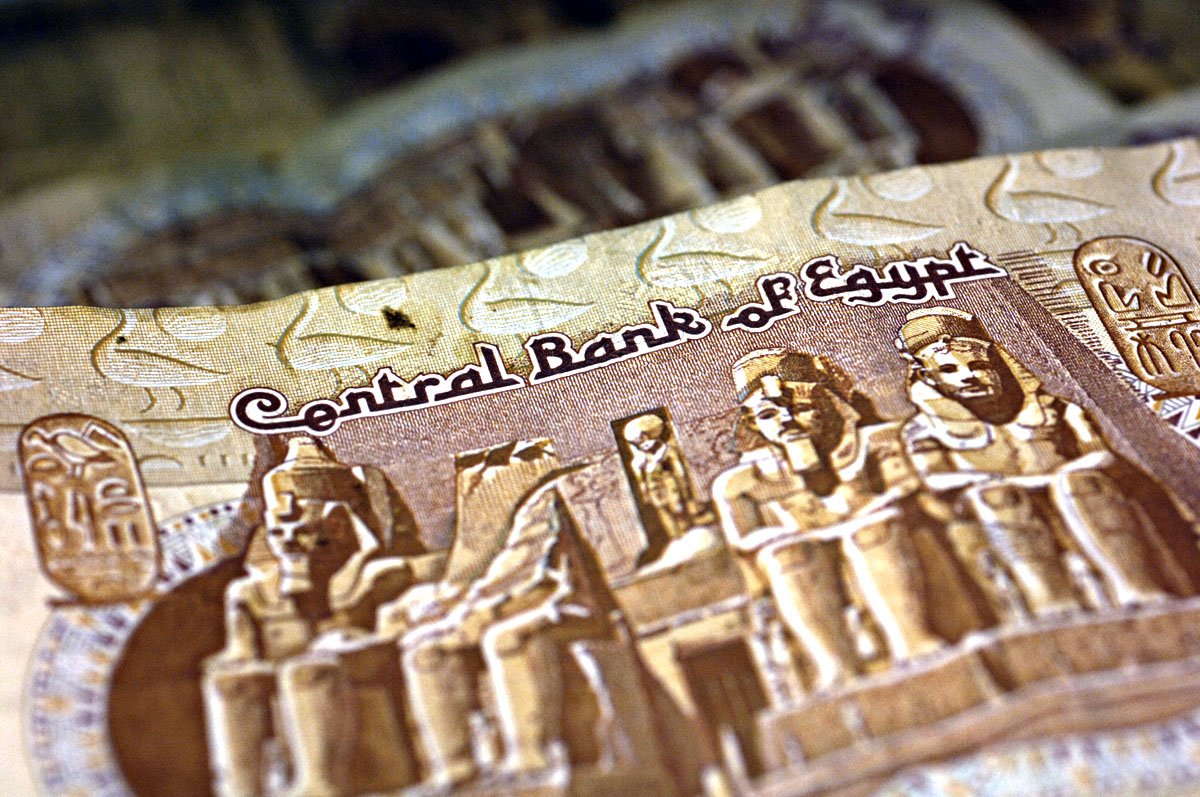
Egypt’s delay in devaluing the pound makes a rate hike unlikely. The Central Bank of Egypt (CBE) is predicted to postpone an increase in interest rates until sufficient foreign exchange reserves are amassed to handle another devaluation and peak inflation. This move comes as the Egyptian government aims to raise billions of dollars through the sale of shares in state-owned enterprises. Goldman Sachs approximates that for a smooth transition to a single market-driven exchange rate, the CBE would require over 5 billion USD. (Asharq)
- Deutsche Bank disapproves further depreciation of Egyptian Pound as a suitable strategy.
Deutsche Bank analysts suggest that another currency devaluation isn't the best path for Egypt, as it might deter foreign investment. They argue that prior devaluations didn't stimulate lasting portfolio inflows and only led to short-term investments. With significant longer-term debt due in 2023 and 2024, another devaluation could jeopardize Egypt's debt sustainability. Moreover, they see limited room for further narrowing of the current account deficit, which has already seen improvement. They also estimate the Egyptian Pound to be around 10% undervalued, arguing against the need for further devaluation. (Enterprise)
- Al-Sisi urges global financial bodies to comprehend Egypt's circumstances.
Egyptian President Abdel Fattah El-Sisi, at the 'For a New Global Financial Pact' summit in Paris, urged international financial institutions to comprehend the circumstances in Egypt and similar nations. El-Sisi highlighted the adverse effects of successive global crises, stating that although Egypt's economic reform program, initiated in 2016, achieved its targets, the Covid-19 pandemic and the Ukraine conflict have impacted the nation's successes. Additionally, he noted a decline in donor funding and an increase in its conditions. (Asharq)
- Private-sector minimum wage to increase, announces National Council for Wages (NCW).
An estimated 21 million workers stand to gain from the National Council for Wages' (NCW) resolution to increase the private-sector minimum wage by 11% to EGP 3k per month, according to NCW Coordinator Hanan Nazeer. Alaa El Sakty, a NCW member and leader of the SME Investors Association, suggested that the minimum wage may be reassessed for further increase by the end of the year. (Enterprise)
- SCA plans to float a 20% stake of its subsidiary on the EGX.
The Suez Canal Authority (SCA) is planning to list a 20% stake of its subsidiary, Al Rabat Company, on the Egyptian Exchange (EGX). This move is part of Egypt's broader initial public offering (IPO) scheme. SCA's chairman, Osama Rabie, assured that the authority's total assets would remain public. He also highlighted the success of the Suez Canal's sovereign fund and anticipates increased revenues and a rise in global trade share in the next fiscal year. (Arab Finance)
- Egypt and French Alstom explore enhancement of transportation collaboration.
In Paris, Egyptian President Abdel Fattah El-Sisi met with Henri Poupart-Lafarge, Alstom Group's CEO, to discuss expanding the company's operations in Egypt's transport sector. They also discussed ongoing projects with the National Authority for Tunnels and the National Railways Authority. (Arab Finance)
- Treasury Bills trading on the Egyptian exchange to begin in Q3.
The Egyptian Exchange (EGX) is set to commence trading on government treasury bills (T-bills) in August or September, according to EGX Chairman Rami El-Dokany. T-bills are government debt instruments with maturity periods from three to twelve months. Additionally, El-Dokany highlighted the rise in government authorities' stock investments, which surged from 4 billion EGP last year to 23.5 billion EGP currently. (Asharq)
- Siemens and Petrojet sign agreement to modernize industries in the Middle East through digitization.
Siemens and the Petroleum Projects and Technical Consultations Company (Petrojet) have entered into a collaboration agreement aimed at fostering the use of advanced digital solutions in the Middle East's industrial sector. The partnership, according to a press release, is expected to leverage the combined skills of both companies to support the digital transformation strategy of Egypt's Ministry of Petroleum and Mineral Resources, assist in achieving Egypt's Vision 2030 goals, and aid major clients in the region's industrial sectors. (Arab Finance)
- Schneider Electric, Magnom Properties and H2-Enterprises join forces to run Forbes International Tower.
Schneider Electric, Magnom Properties, and H2-Enterprises have partnered to operate Forbes International Tower, making it the world's first project to fully operate on the Liquid Organic Hydrogen Carrier (LOHC) system. This system, which provides a safe and eco-friendly way to store, transport, and release hydrogen, will be fueled by clean hydrogen produced from non-recyclable plastic and other organic waste. Schneider Electric's digital energy solutions will also be integrated, raising sustainability standards and aligning with the UN's 2030 Agenda for Sustainable Development. (Arab Finance)
- EgyptAir aims to increase biofuel usage by 2% by 2025.
EgyptAir's Fuel and Emission Director, Ahmed Mattar, revealed the airline's intent to escalate its biofuel consumption to 2% by 2025. This initiative aligns with the company's broader environmental strategy to increase reliance on biofuel and decrease carbon emissions. Moreover, by 2030, EgyptAir is planning to enhance its biofuel usage to 6%. (Arab Finance)
Stay up to date
More Newsletter to Check



SUBSCRIBE TO NEWSLETTER
Subscribe to download our daily economics and business roundup


×
![]()