
After 10 Consecutive Raises: The Federal Reserve Holds Key Interest Rate Steady, but Hints at Future Increases


After 10 Consecutive Raises, the Federal Reserve Holds Key Interest Rate Steady, but Hints at Future Increases
The Federal Reserve decided to maintain its key interest rate at about 5.1%, the highest level in 16 years, after raising it 10 consecutive times to combat inflation. However, in a surprising move, the Fed indicated that it might raise rates twice more this year, potentially starting as early as next month. The decision suggests that the central bank believes its previous rate hikes have had some success in curbing inflation. Nevertheless, top Fed officials want more time to assess the impact of their actions on the economy and inflation. The policymakers forecast an additional half-point increase in the key rate, leading to a benchmark rate of approximately 5.6% this year. The Fed's projections demonstrate a more hawkish stance than expected, with many policymakers anticipating at least two more quarter-point increases. These forecasts also suggest that the benchmark rate will remain higher for a longer period than previously anticipated. The central bank's strategy of raising rates has resulted in higher borrowing costs for mortgages, auto loans, credit cards, and business loans, aiming to slow down spending and combat the highest inflation in four decades. While consumer inflation has decreased from its peak last year, core inflation remains high. Additionally, the Fed wants to assess the impact of reduced bank lending on the economy and gauge the potential risks associated with a rapid tightening of loan qualifications. Overall, the economy has performed better than initially expected, with companies continuing to hire and consumer spending remaining strong, particularly in sectors like travel, F&B, and entertainment.
Although thriving to be a significant opponent to the world bank

BRICS Development Bank Struggles to Repay Dollar Debts Amid Funding Challenges. The New Development Bank, established by the BRICS nations (Brazil, Russia, India, China, and South Africa) to reduce reliance on US dollar loans, is facing difficulties in repaying its own debts in dollars, according to sources cited by the Wall Street Journal. The Shanghai-based institution has significantly reduced its issuance of new loans. Despite its goal of de-dollarizing lending, about two-thirds of the bank's borrowings were denominated in dollars. Following Russia's invasion of Ukraine, Wall Street backers became hesitant to lend to a bank partially owned by Moscow. The appointment of controversial figures, such as Brazil's impeached former president Dilma Rousseff and an upcoming Russian appointee, further stirred controversy. As a result, the bank is servicing its prior debt through more expensive borrowings, leading to credit downgrades and increased borrowing costs. The institution is exploring potential membership expansion and financial support from countries like Argentina, Saudi Arabia, and Honduras. However, given China's economic downturn, it is unlikely to receive substantial backing from Beijing. The bank maintains that there is interest in its bonds and claims strong loan origination.

Although Oil Prices are currently relatively stable
Global Oil Production Declines for Third Consecutive Month in 2023, Led by Non-Opec and Opec Producers. The decline in global oil production during May 2023 marks a continuation of a downward trend observed over the past three months. After a promising start to the year with growth recorded in the first two months, the decrease in May raises concerns about the stability of the global oil supply.
Preliminary data reveals that global oil supply dropped by 1.02 million barrels per day (mb/d), reaching an average of 100.2 mb/d. Both non-Opec and Opec producers contributed to this decline in production.
Non-Opec production, including Opec natural gas liquids, experienced a significant decrease of 0.6 mb/d in May 2023, averaging 72.2 mb/d. This decline was primarily attributed to reduced production in Russia and Canada, which more than offset the higher output observed in Other Asia and Other Eurasia.
Furthermore, Opec production also witnessed a decline of approximately 0.5 mb/d, resulting in a market share of 28.0 percent. This decrease in Opec production further contributed to the overall downward trend in global oil production.
Looking ahead, growth estimates for non-Opec supply in 2022 remained unchanged at a growth rate of 1.9 mb/d, with an average production expected to reach 65.74 mb/d. This figure is slightly lower than the previous forecast of 65.76 mb/d by Opec. The forecast for 2023 maintained a broad stability with a growth estimate of 1.43 mb/d, resulting in an average production level of 67.17 mb/d. However, minor downward adjustments were made to supply forecast data for Other Asia and certain countries, which were balanced out by revisions to data for the OECD Americas region.
The consecutive decline in production raises concerns about the stability of the global oil market and its potential impact on prices and supply-demand dynamics. Continued monitoring and analysis of production trends will be crucial to assess the long-term implications for the energy industry and global economy.
With Youth Unemployment on the rise
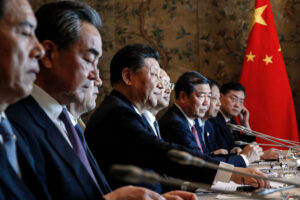
China's Economic Struggles Overshadow Espionage Revelations and Diplomatic Talks. While the world's attention is captivated by espionage revelations and high-level diplomatic discussions, China finds itself grappling with a more pressing concern - its struggling economy. Disappointing economic indicators, including a staggering rise in youth unemployment, signal that the anticipated economic rebound following the relaxation of stringent "zero-Covid" measures has lost its vigor, forcing China to confront deep-rooted structural issues.
As Beijing hosts American business leaders and welcomes top-level visits from President Joe Biden's diplomats, the timing of China's willingness to ease tensions with the United States may hold strategic significance. With mounting calls for stimulus measures, stabilizing the Sino-U.S. relationship could instill confidence among both domestic and foreign investors, who have become increasingly wary of geopolitical risks clouding the business landscape.
The unprecedented levels of youth unemployment, reaching a record 20.8% among 16 to 24-year-olds in May, have become an escalating concern for China's policymakers. While officials suggest that many young individuals are yet to enter the job market and anticipate improvements as the economy strengthens, analysts express deep-seated apprehensions regarding China's economic prospects. The weaker-than-expected rebound raises doubts about the sustainability of China's growth trajectory and its ability to address longstanding structural imbalances.
China's pursuit of overseas investors, despite growing unease among U.S. and foreign companies regarding an unpredictable environment, underscores its determination to bolster economic ties. Recent visits by prominent American business figures, including Microsoft co-founder Bill Gates, serve as testament to China's ongoing efforts to foster cooperation and ease tensions with the United States.
As Secretary of State Antony Blinken embarks on his visit to China, expectations remain modest, signaling that major breakthroughs are unlikely. However, Beijing's current economic challenges may serve as an impetus to stabilize the Sino-U.S. relationship, assuaging concerns among investors who view geopolitical risks as a significant market factor.
While youth unemployment in China is partially attributed to the pandemic, it stems primarily from longstanding domestic issues, such as a mismatch between the increasing number of college-educated individuals and the availability of suitable employment opportunities. The surging enrollment rate in universities, which reached almost 60% last year, exacerbates the job scarcity faced by the younger generation. Graduates find it increasingly difficult to secure their desired roles, resulting in mounting anxiety and despair among new job seekers.
While policy adjustments and a declining population offer glimmers of hope to alleviate the cutthroat competition, the present landscape remains arduous for recent graduates and job seekers in China. Addressing these economic challenges and cultivating a more favorable business environment will be imperative for China's long-term growth and stability.
With escalating trade frictions between both nations
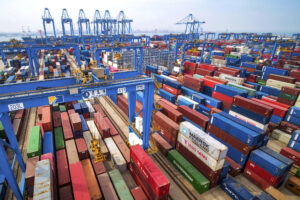
Steep Decline in US Imports from China Across Multiple Categories Raises Concerns. The latest trade data from the Commerce Department reveals a significant decline of 26% in US goods imports from China during the first four months of 2023. This decline affected a wide range of product categories, with 86 out of 98 categories experiencing a decrease compared to the same period last year. Key categories such as electrical machinery, nuclear energy equipment, toys, furniture, and plastics saw a substantial slide in imports, from nearly $110 billion in January-April 2022 to $84 billion in January-April 2023. These five categories accounted for more than half of the total imports from China in both periods.
In contrast, imports from China's neighboring Asian countries fell by only 6% during the same period, suggesting that China's decline in imports outpaces that of its regional counterparts. Moreover, while the proposed Indo-Pacific Economic Framework (IPEF) countries experienced a mere 4% decrease in imports, surpassing imports from China, the group has already benefited from trade frictions between the US and China.
In response to the ongoing trade dynamics, the House Ways and Means Committee is set to vote on legislation that approves the trade deal with Taiwan and introduces new requirements for congressional consultation and transparency in future trade negotiations. Meanwhile, Senator Joe Manchin has criticized the Treasury Department's guidance on electric vehicle tax credits, asserting that the proposed rule deviates from the intent of Congress.
As US Trade Representative Katherine Tai engages in various public events to discuss the Biden administration's trade agenda, the decline in US imports from China across multiple categories raises concerns about the broader trade landscape and the implications for global supply chains.
Stay up to date
More Newsletter to Check



SUBSCRIBE TO NEWSLETTER
Subscribe to download our daily economics and business roundup


×
![]()