
Erdogan heavy favorite to secure re-election in Turkey’s presidential runoff on May 28th

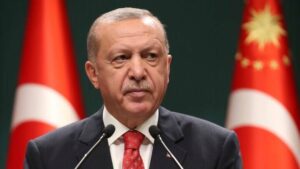
Erdogan heavy favorite to secure re-election in Turkey’s presidential runoff on May 28th
During last Sunday’s elections, the incumbent candidate narrowly failed to secure a victory in the first round of presidential elections with 49.5% of the votes but leads as the favorite into the runoff against Kemal Kilicdaroglu, the leader of the opposition, who won 44.9% of the votes.
Sinan Ogan, a third candidate, performed strongly with 5.2% of the votes. In the parallel parliamentary election, President Erdogan’s AKP-MHP alliance outperformed expectations gaining 323 seats in the 600-member National Assembly. Last Sunday’s results contradicted most pre-election polls and the market consensus, handing Erdogan a commanding lead ahead of the presidential runoff on May 28th and a comfortable simple majority in the National Assembly for his party alliance.
To overcome the deficit in the presidential race, opposition candidate Kemal Kilicdaroglu would need to attract the majority of the 2.8 million voters who supported ultra-nationalist, Sinan Ogan, as well as those who did not vote in the first round, a challenging task in our view. In our base case scenario of President Erdogan’s reelection, we expect a continuation of his heterodox economic policy model prioritizing strong GDP growth and low interest rates at the expense of high inflation and deepening external vulnerabilities. We believe tighter micro-management of the economy, ad-hoc financial support from friendly governments, lower global energy prices and a traditional increase in hard currency inflows during the peak summer tourism season will likely allow the economy to continue to muddle-through in the near-term.
However, barring a structural change in the economic policy mix, we expect that over time Turkey will likely be edging closer to a “binding constraint” on external liquidity accompanied by mounting market concerns about a potential balance of payments crisis. The timing of a “crisis episode” is highly uncertain but will hinge mainly on the willingness of friendly countries to continue to provide external financing and the resiliency of domestic economic confidence in the face of prolonged heterodox economic policy management under a likely re-elected Erdogan.
G7 issues strongest condemnation of China as it intensifies response to Beijing
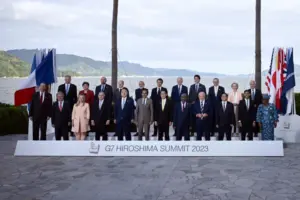
Concerns raised over ‘economic coercion’ and militarisation of South China Sea
The G7 has issued its strongest condemnation of China as the world’s most advanced economies stepped up their response to what they called rising military and economic security threats posed by Beijing. Criticising China over everything from its militarisation of the South China Sea to its use of “economic coercion”, the G7 urged Beijing to push Russia to withdraw its troops from Ukraine.
The G7 members said they were “seriously concerned” about events in the East and South China Seas, and “strongly oppose any unilateral attempts to change the status quo by force or coercion”. They also called for a “peaceful solution” to tensions across the Taiwan Strait. The group stressed that they “were prepared to build constructive and stable relations” with Beijing but recognised the importance of “engaging candidly . . . and expressing our concerns directly to China”.
The statement marks the strongest criticism of Beijing by the G7. At the three-day summit in Hiroshima, the US and its democratic allies are seeking to project a unified front in the face of global division caused by the war in Ukraine, the US-China dispute, climate change and the expansion of artificial intelligence. Volodymyr Zelenskyy, Ukraine’s president, landed in Hiroshima on Saturday, ahead of his participation in Sunday’s sessions devoted to the war in Ukraine.
Zelenskyy, whose attendance was kept secret until shortly before his arrival, wrote on Twitter: “Japan. G7. Important meetings with partners and friends of Ukraine. Security and enhanced co-operation for our victory. Peace will become closer today.” A Ukrainian official travelling with Zelenskyy told the Financial Times that the main Ukrainian goals at the summit were to gain support for Kyiv’s peace plan, secure greater military aid and co-operation, convince allies to ratchet up sanctions on Russia and discuss further measures to hold Moscow accountable.
Downing Street said it would start training Ukrainian pilots “this summer” after the US gave the green light for the transfer of jets from countries including the Netherlands to the administration in Kyiv. Britain has pledged to deliver a “basic programme” of jet pilot training for Ukrainians, although they will need further advanced lessons. “Obviously there will need to be further training with regards to F16s, specifically, which the UK doesn’t have as a capability,” said a Number 10 spokesperson.
On Saturday evening, Zelenskyy held bilateral meetings with Rishi Sunak of the UK, India’s Narendra Modi, European Council president Charles Michel and France’s Emmanuel Macron. Macron described the decision by the Ukrainian leader to attend the summit as “a game-changer.” Zelenskyy invited Modi, whose country has vastly expanded its purchases of Russian oil over the past 16 months and abstained on UN votes to condemn the invasion, to back Kyiv’s peace proposal, and thanked him for providing humanitarian aid, his office said.
The increasingly tough stance on Beijing comes after two years of the US and Japan working with the other G7 countries to strike a harsher tone against China’s military activity around Taiwan and its use of economic pressure. The leaders of Japan, Canada, France, Germany, Italy, US and UK also warned of “heightened uncertainty about the global economic outlook”, pledging to remain vigilant and flexible in their macroeconomic policy as global inflationary pressure continues.
On economic policy towards Beijing, the G7 said its approach was “not designed to harm China” nor “to thwart China’s economic progress and development”. Member nations said the group was not interested in decoupling from China and was simply engaging in “de-risking”. But they said they would tackle “challenges posed by China’s non-market policies and practices, which distort the global economy” and “foster resilience to economic coercion”.
Progress on the U.S. debt ceiling is looking more likely
There were several news items which signalled the end of political brinkmanship is in sight and an ultimate agreement is now expected next week.
In that regard, equities rallied, volatility declined, U.S. Treasuries sold-off but T-Bills rallied and commodities like oil and wheat advanced. Elsewhere, Japan’s 1Q GDP was more robust. It’s 20-year auction was solid and the TOPIX drew-out modest gains to reach highs not seen since 1989. The slightest of setbacks was from CNH. China’s problem is more unique. The balance of payment is driven by a high current account surplus, which is then offset by direct and portfolio outflows. The added complication of a weak interest rate differential vis-a-vis the U.S. and a weaker than expected recovery story weighed on CNH as it rose above 7 this week.
The second-order derivative in lower swap rates has given way to a rally in CGBs, and in turn EM local rates. However, the growth shock is becoming more challenging to ignore and we even saw Barclays as the first sell-side institution to downgrade China’s 2023 GDP growth forecast to 5.3% from 6.3%. The idea of spiking FX volatility was evident in Thailand after elections as some of the 250 unelected members of the Senate have begun to oppose Pita Limjaroenrat becoming Prime Minister.
The political volatility spread around the globe. Ecuador’s government almost-impeached President dissolved parliament via “muerte cruzada”, meaning early elections within 90 days under Article 148 of the constitution. The tentative election date is August 20th, although President Lasso does not intend to run. The same wave of political uncertainty was evident in Turkey, where incumbent President Erdogan is set to maintain his grip on the country as the election heads to a second-round run-off. However, we have begun to see significant IMF progress. Ghana secured a 3 billion USD 3-year ECF, which paves the way for Zambia next. Suriname also got its second review of the staff-level agreement, but an approved deal is a condition for the bondholder restructuring by June 15th.
The AI revolution already transforming education

Schools and universities are using ChatGPT in the classroom, but will it devalue the fundamentals of learning?
Since ChatGPT — a powerful, freely available AI software capable of writing sophisticated responses to prompts — arrived on the scene last year, it has prompted intense speculation about the long-term repercussions on a host of industries and activities. But nowhere has the impact been felt more immediately than in education. Overnight, rather than labour through traditional exercises designed to develop and assess learning, students could simply instruct a computer to compose essays, answer maths questions or quickly perform complex coursework assignments and pass the results off as their own.
As a result, schools and universities have been forced into a fundamental rethink of how they conduct both tuition and academic testing. Worries about AI-based plagiarism have pushed a number of institutions to opt for an outright ban of bots like ChatGPT. But enforcing this is difficult, because detecting when the technology has been used is so far unreliable. Given how pervasive the technology already is, some educators are instead moving in the opposite direction and cautiously experimenting with ways to use generative AI to enhance their lessons. Many students are keen for them to take this approach. But these experiments raise the question of whether it is possible to open the door to AI in education without undercutting the most important features of human learning — about what it actually means to be numerate and to be literate.
When ChatGPT was launched by San Francisco-based tech company OpenAI in November 2022, the 300-odd-person team, backed by Microsoft, was expecting it to be a small-scale experiment that would help them build better AI systems in the future. What happened next left them stunned. Within weeks, ChatGPT, a tool based on software known as a large language model, was being used by more than 100mn people globally. Now, it is being tested inside law firms, management consultancies, news publishers, financial institutions, governments and schools, for mental health therapy and legal advice, to write code, essays and contracts, summarise complex documents, and run online businesses.
For lecturers at the University of Cambridge, the timing of ChatGPT’s launch — as students headed home for Christmas holidays — was convenient. “We were able to take stock,” says Professor Bhaskar Vira, the university’s pro-vice-chancellor for education. In the discussions that followed, teaching staff observed as other universities took action on ChatGPT, in some cases banning the technology, in others offering students guidance. By the time students returned, the university had decided a ban would be futile. “We understood it wasn’t feasible,” Vira says. Instead, the university sought to establish fair use guidelines. “We need to have boundaries so they have a very clear idea of what is permitted and not permitted.” Their assessment was correct. A survey by Cambridge student newspaper Varsity last month found almost half of all students have used ChatGPT to complete their studies. One-fifth used it in work that contributed to their degree and 7% planned to use it in exams. It was the equivalent, said one student, of “dropping one of your cleverer mates a message” asking for help.
Europe’s politicians impose price caps to address soaring food costs
High inflation sparks return of controversial measure that retailers say forces them to sell at a loss
Europe’s retailers and governments are locked in their fiercest tussle over food costs for 50 years, with policymakers resorting to price controls to tackle the worst cost of living crisis for a generation. Despite lower energy prices easing overall price pressures, growth in the cost of food has continued to soar, prompting increasingly unconventional market interventions from politicians trying to assuage public anger.
Food prices in the EU rose 16.6 % in the year to April, according to Eurostat, far in excess of a headline inflation rate of 8.1 %. Some of the biggest surges have been in the cost of staples, with the cost of eggs rising 22.7 % over the period, whole milk up 25 %, and sugar by 54.9 %. “We haven’t had price controls in a general pattern in the western world since the 1970s,” said Lars Jonung, a Swedish economist and expert on the controversial caps. Central and eastern European states hardest hit by rising prices, such as Hungary and Croatia, have moved to cap the cost of essentials to shield the most vulnerable, who tend to spend more of their income on food.
The pressure on retailers to toe the line on price rises has been exacerbated by a sharp fall in the cost of agricultural commodities over the past year. The UN’s Food Price Index was 19.7 per cent lower in April, compared with the same month last year. “While some price hikes may be justified, there is growing suspicion that others are just opportunistic excuses by businesses to inflate prices,” said Monique Goyens, director-general of the Bureau Européen des Unions de Consommateurs, which represents 46 consumer organisations from across the continent, who called on governments to “adopt strong measures to protect consumers against spiralling prices”.
The Belgian consumer protection organisation Test Achats has called for a similar measure to France’s original anti-inflation basket proposal, which was tougher than what Paris has been able to implement. Austria’s chamber of labour body, AK, has also called for “price regulation” of foods. However, retailers say that they are not to blame and that, far from price gouging, are having to take the hit on capped goods. Kodály Delikatessen, a small supermarket in Pécs, southern Hungary, has grouped capped products under a sign that warns customers against buying “products of the dictatorship”, saying the wholesale price of certain items was higher than the capped retail price. The Delikatessen added: “The regulation forces us to sell at a loss!”
Stay up to date
More Newsletter to Check



SUBSCRIBE TO NEWSLETTER
Subscribe to download our daily economics and business roundup


×
![]()