
Declining U.S. inflation caused front-end Treasury yields to fall


Declining U.S. inflation caused front-end Treasury yields to fall
CPI inflation coming in at its lowest level since April 2021, and core services excluding rents which rose just 0.1%, led the market to price-in a June pause.
The WSJ termed this as a “summer vacation” for the Federal Reserve. The second theme was around the U.S. debt ceiling. Treasury bill yields were more stable over the week, even if the political narrative became more tense. The case study of 1979 is relevant when Treasury missed T-Bill maturity payments but cured these within 20 days. There are two nuances to U.S. sovereign debt, which do not apply to any other jurisdiction or sovereign. U.S. Treasuries do not cross-default and do not pay post-default interest (PDI). The comparison to 2011 is a bit more apt as it did culminate in S&P downgrading the country, but U.S. Treasuries aggressively rallied in the aftermath and proved to be “credit worthy”. Even if Moody’s or Fitch removed the U.S. AAA rating, there ought to still be a flight-to-quality and U.S. 1-year CDS at a record high of 177bps will ultimately decline sharply.
The theme across EM was similar on disinflationary trends. China’s weaker inflation offered several key takeaways: (1) the inflation release highlighted that manufacturing demand declined 4.7%; (2) consumer tourism spending also declined, despite the narrative of pent-up demand; (3) food inflation fell, but poultry +6.7% and pork +4.0% inflation was steady; and (4) PPI was notably weak and down 3.6%. These four features validated the contraction in manufacturing PMIs reported in the past two weeks and contributed to declining non-deliverable swap yields falling.
The Peoples Bank of China is now increasingly likely to cut deposit rates, but the timing remains uncertain. The next significant development is Turkish elections. The last Turkish poll (KONDA) favored Kilicdaroglu by 49.3% to Erdogan’s 43.7%, which came just after Ince had pulled out of the Presidential race. As one of the more closely fought EM elections in the past decade, the developments next week will be important for risk sentiment.
BOE makes progress but will need some help
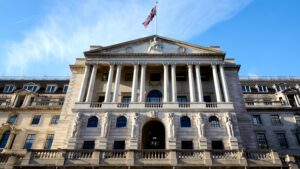
The UK central bank is doing its part to fight inflation. The government needs to pitch in.
The Bank of England had no practical alternative but to raise interest rates on Thursday by 25 basis points to 4.5%. Indeed, that was the easy part of its policy deliberations. The more uncertain and complicated parts had to do with its forecasts and forward policy guidance, and those made it clear its policy efforts will need to be accompanied by supportive government measures.
Both push and pull factors rendered the rate increase virtually inevitable. The BOE was pushed by multiple signs of more persistent inflation, both actual and prospective, than the markets and the central bank had anticipated, including a March inflation reading of 10.1%, which exceeded both the consensus forecast and the BOE’s own projection; core inflation was stubbornly stuck above 6%. Meanwhile, surveys continue to point to high wage growth, including this week’s data from Reed Recruitment showing that new jobs commanded 10% increases on average. The resulting push factor was accentuated by the pull from other central banks. The European Central Bank and, in particular, the Federal Reserve both raised rates by 25 basis points last week. This helped raise the markets’ implied probability of a BOE increase this week to more than 90%. Failure to validate such overwhelming market pricing would risk unsettling market volatility.
It also does not help that the UK’s inflation rate is double that of the US and well above that of the euro zone even though the BOE was first among the three main central banks to recognize its mischaracterization of inflation as transitory as well as the first to start increasing interest rates in December 2021. It is now maintaining the longest streak of consecutive increases. The revisions to the BOE’s forecasts were both encouraging and dispiriting. They were also made with a degree of humility given the fluidity of the global economy.
On the positive side, the MPC increased its growth projections by the most in its history, significantly reducing the threat of recession. Less positive were the upward revisions to inflation for both this year and next. This reflected the recognition of the growing importance of second-round effects in driving prices upward, such as higher wage increases. Luckily for the government, the 2023 revision of the inflation rate to around 5% still allows for its objective of cutting it in half, though it doesn’t leave much wiggle room. Together, these revisions open the door wide for at least one more interest-rate increase as early as June. They also highlight the narrow and complicated path the BOE is on to reduce inflation, avoid a sharp growth slowdown and maintain financial stability. Raising rates too high risks a recession and financial stress for households and businesses. A mistake on the other side would allow inflation to become more embedded, setting up the UK for even greater economic and financial challenges.

Is the U.S. Dollar’s Dominance Under Threat?
While the dollar’s pre-eminent role in global trade and finance could diminish with time, recent fears about its demise seem overblown.
The U.S. dollar has long dominated global trade and finance. It serves as the primary medium to buy and sell goods, as well as a safe haven for foreign reserves for financial institutions and businesses around the world. Its dominant status gives the U.S. some big economic advantages. Because international trade is largely denominated in U.S. dollars, U.S. companies and consumers are generally less likely than their international peers to face foreign-exchange transaction costs or risks from shifting exchange rates. In addition, strong global demand for dollar-denominated U.S. securities, such as Treasury bonds, historically has allowed the U.S. government to borrow at relatively low interest rates to fund its spending needs.
However, some investors fear that the U.S. dollar might lose the primacy it has held since supplanting the British pound as the world’s top reserve currency after World War II. Recently, such concerns have flared up amid geopolitical tensions that may bolster other currencies, such as the euro, the Chinese renminbi or even a proposed common currency among the so-called BRICS nations of Brazil, Russia, India, China and South Africa. The idea of “de-dollarization” has been on the radar for at least 20 years—and, indeed, the dollar’s share of reserve currencies has gradually declined as foreign central banks have diversified. In theory, increased competition from other currencies could hurt demand for the U.S. dollar, potentially causing its value to decline in foreign-exchange markets and reversing some of the advantages its dominance has conferred on U.S. institutions and investors.
However, the U.S. dollar’s incumbent role in the global economy is unlikely to be seriously challenged any time soon for four key reasons:
- The U.S. dollar remains the world’s dominant “medium of exchange,” or means of buying and selling goods. In March, for instance, the Society for Worldwide Interbank Financial Telecommunication (SWIFT) reported that the U.S. dollar was the most commonly used currency on its global payment system, accounting for 41.7% of payments, followed closely by the euro. By comparison, the Chinese renminbi was used in 2.4% of SWIFT payments, despite China accounting for a relatively larger percentage of global trade.
- The dollar also remains the primary “unit of account” globally, meaning it serves as the standard way that trading partners measure the market value of goods and services being exchanged. According to the Federal Reserve, from 1999-2019, the U.S. dollar accounted for 96% of trade invoicing in the Americas, 74% in the Asia-Pacific region and 79% in the rest of the world. The only exception was in Europe, where the euro is the primary invoicing currency, given frequent trading between EU partners.
- The U.S. dollar is widely viewed as a reliable “store of value,” or safe haven. In large part because of this stability relative to other currencies, the greenback accounts for nearly 60% of foreign reserves (i.e., the currencies held by central banks to help manage their nation’s monetary system and exchange rate). While the U.S. dollar’s share of central bank reserves has declined over time, it still dwarfs the shares of all competitors. What’s more, according to the Brookings Institution, more than 65 countries peg their currency to the U.S. dollar.
- There is currently no viable alternative. Other currencies have been discussed as potential competitors to the U.S. dollar, but none comes close to posing a credible threat—at least, not yet. The euro is the world’s second-largest reserve currency, but ranks a distant second, accounting for 21% of foreign reserves versus the dollar’s nearly 60%. Key factors inhibiting the euro’s broader use: According to the National Bureau of Economic Research, there is an inadequate supply of high-quality, euro-denominated assets that international investors and central banks can use as a store of value, and no eurozone-wide “safe” government-backed asset. China’s renminbi accounts for a very small portion of foreign exchange reserves, and Chinese policymakers’ control over the exchange rate makes it unlikely to quickly gain traction. Gold is time-consuming and expensive to move, thus making it less than ideal as a medium of exchange or unit of account. A BRICS common currency is still very hypothetical. BRICS nations may find it challenging to coordinate across central banks and could ultimately prove unwilling to exchange their U.S. dollar reliance for a potentially volatile currency that could struggle to achieve broader adoption.
Watershed elections in Turkey were on Sunday

On Sunday May 14th, Turkish citizens voted for President and the 600-member National Assembly in an election considered by observers as the most consequential in the country’s modern history.
Implications for both economic policy and financial markets will be profound, but are likely to vary dramatically depending upon the election outcome and the various nuances that surround it. Based on pre-election dynamics in the last few days, the “regime change” scenario has become investors’ base case. Kemal Kilicdaroglu, leader of the largest opposition party, the centrist CHP, and presidential candidate of the ideologically highly heterogenous Table of Six (ToS), appears favored to win against incumbent right-wing President Erdogan who has been in power as Prime Minister or President since 2003. We believe that if Mr. Kilicdaroglu fails to secure a victory in the first round of the Presidential Elections on Sunday, the political dynamics could again shift materially in the two weeks leading up to the potential run-off against Mr. Erdogan on May 28th.
Markets will also be paying particular attention to any risk of a “fat tail” scenario in the form of contested elections in case the incumbent loses. We believe this is unlikely unless the margin of victory is extraordinarily tight, i.e., no more than 0.5% difference corresponding to ~300K votes. In case the opposition wins the presidency, we expect an initial sharp turn toward orthodox economic policy management, but one that is likely to fade over time as political constraints assert their dominance.
Normalization of monetary policy via an immediate large interest rate hike by the Central Bank would be the likely first step, but regaining investor confidence on a sustainable basis would depend heavily on the willingness and ability of the new authorities to implement an aggressive reversal of Erdogan-era distortionary macroeconomic policies. In case President Erdogan is re-elected, we expect heterodox economic policy and a “high growth/high inflation model” to persist until the economy gets dangerously close to a Balance of Payments (BoP) crisis, which we believe is likely in that scenario. How long it would take until a crisis materializes would be a function of the willingness of friendly countries (Russia and GCC countries) to continue to plug Turkey’s growing external financing gap and how successful increasingly repressive micro-management of the economy will be to prevent a loss of confidence by domestic economic agents and households.
Stay up to date
More Newsletter to Check



SUBSCRIBE TO NEWSLETTER
Subscribe to download our daily economics and business roundup


×
![]()