
Egypt’s total net foreign liability position hit a new all-time high in March

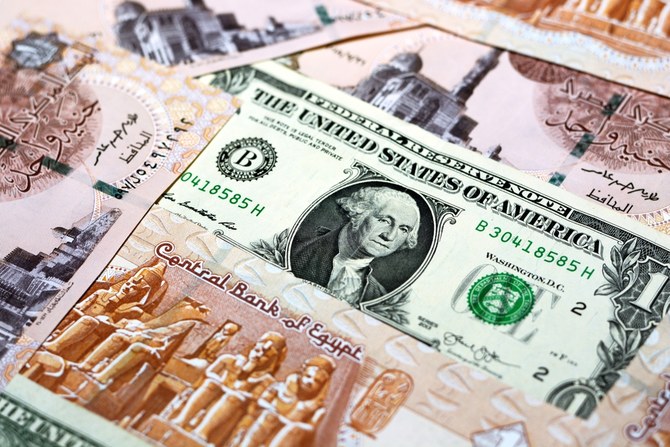
Egypt’s total net foreign liability (NFL) position hit a new all-time high in March, widening to 24.5 billion USD, from 23 billion USD in February. The CBE’s NFL position improved marginally to 8.95 billion USD in March, from 9.2 billion USD in February, but the banking sector (ex-CBE) led the deterioration in the country’s NFL position after widening by 1.7 billion USD in March to a record high of 15.5 billion USD, with the drop totally driven by a drop in the sector’s foreign assets. It is worth noting that based on the IMF’s loan agreement with Egypt, the CBE will “consult with staff if aggregate banks’ net foreign assets NFAs show a cumulative decline of 2 billion USD over a three-month period.” (CBE, Mohamed Abu Basha)
- FRA grants license to 1st gold investment fund in Egypt.
Evolve Azimut, a joint venture between Evolve Holding and Azimut Egypt, has obtained the Financial Regulatory Authority’s (FRA) approval to launch the first gold investment fund in Egypt. The FRA’s approval comes in line with the recent hike in gold prices, with the price of the 21-karat gold rising by 58% since the beginning of the year and by over 167% in 12 months to register 2,600 EGP per gram. (Asharq Business)
- Earlier this week Supply Minister Ali El Moselhy said that the Supply Ministry is planning to allow expats to import a certain amount of gold into the country without paying customs,
a move which policymakers hope will help to hold down the price of the precious metal which has soared over the past year due to economic uncertainty. The decision would allow expats and Egyptians coming from abroad to bring up to 150 grams of gold into the country custom-free, a move which will significantly help stabilize gold prices in the local market. Gold prices have more than doubled over the past year as the currency crisis and wave of inflation push Egyptians to put their savings into gold. (Hapi Journal)
- S&P Global Ratings has cut its outlook on the National Bank of Egypt, Banque Misr, and CIB to negative.
The change mirrors the agency’s negative outlook on Egypt’s sovereign credit rating, which it announced last week, warning that the country risks not being able to meet its external funding needs if it doesn’t deliver on economic reforms tied to its IMF assistance program. The ratings agency held the three banks’ credit ratings at B, aligned with Egypt’s sovereign rating. (Bloomberg)
- Prime Minister Moustafa Madbouly last week moved to reassure the markets that Egypt will meet its debt obligations
amid rising concern among investors that the country is at risk of default. “I reassure you that the Egyptian state has not failed, nor will it fail, to pay back its international debt,” he said in televised statements. (Hapi Journal)
- Saudi eXtra freezes business in Egypt over market uncertainty.
Saudi Arabia-based United Electronics Company (eXtra) has decided to discontinue its expansion plans in Egypt due to uncertainty of the market’s outlook, following a feasibility study. This decision was backed by a feasibility study to review the company’s external expansion plans in the North African country. The expected negative financial impact of discontinuing the eXtra’s expansion in Egypt is around 38 million SAR (10.13 million USD). (Arab Finance)
- The government is reportedly mulling adding secondary stake sales in state-owned,
EGX-listed petrochemicals players Sidi Kerir Petrochemicals (Sidpec) and Abu Qir Fertilizers to the Madbouly government’s rebooted privatization program. In addition, seventeen consortiums have been pre-qualified to submit bids for desalination projects the government is tendering to the private sector. (Al Mal)
- Gov’t considering importing wheat in Indian rupee, yuan, says Supply minister.
Egypt is considering importing wheat in exchange for foreign currencies other than the USD, including the Indian rupee and the Chinese yuan. On another note, the Minister stated that the country’s strategic wheat reserve has decreased to 2.6 months because of gov’t supply to mills and pasta factories to stabilize prices. The Minister said the gov’t has purchased 365,000 tons of wheat from local farmers since the beginning of the harvest season, which began earlier in April. He unveiled that Egypt seeks to import around 5 million tons of wheat in 2023. (Ahram Online)
- The government will start gradually raising the prices of commodities sold to ration card holders.
The price review will start “in the coming days,” the minister said, adding that without raising prices “the government will not be able to fund or provide these commodities.” Food prices are rising at a record rate: Inflation jumped 32.7% y-o-y in March as prices continued to accelerate on the back of the series of currency devaluations, the foreign-currency crunch, and higher fuel prices. (Bloomberg Asharq)
- Japan to fund 1st phase of Cairo Metro Line 4 with over 700 million USD.
Japan and Egypt have signed around 700 million USD financing package as the third tranche to fund the Cairo Metro Line 4 – Phase 1, Prime Minister Mostafa Madbouly said. The first phase of the Cairo Metro Line 4 will connect Greater Cairo to 6th of October City, passing by the Grand Egyptian Museum. Japan is looking forward to boosting its investments in Egypt across several development fields, especially green economy, Japanese Prime Minister Fumio Kishida said. (Arab Finance)
- The Higher Education Ministry’s Supreme Council of Private Universities is set to officially scrap the centralized admissions platform that imposed a Tansik-style system for private and nonprofit universities,
two years after it introduced the platform. The council had temporarily changed the admissions process for the current academic year after determining that it was not best serving the needs of universities or students. After a further assessment, the council has decided to make the change official for the 2023-24 academic year, with a few additional changes. It is worth mentioning as well that German will be introduced as an elective second language in public schools in the 2024-2025 academic year. (Enterprise)
Stay up to date
More Newsletter to Check



SUBSCRIBE TO NEWSLETTER
Subscribe to download our daily economics and business roundup


×
![]()