
Catastrophic earthquake in Turkey could have significant political implications ahead of elections


Catastrophic earthquake in Turkey could have significant political implications ahead of elections
Devastating earthquakes hit large regions in southern Turkey and northern Syria, leveling thousands of buildings and causing a humanitarian tragedy with close to 20,000 confirmed casualties and hundreds of thousands injured at the time of writing.
This is the worst natural disaster in Turkey since 1999 when a previous earthquake caused widespread devastation and casualties. Beyond the immeasurable human tragedy, it is likely that the event will significantly alter the political and economic dynamics ahead of critically important Presidential and general elections that are still scheduled for May 14th. The date of the elections has come under question given the significant logistical challenges that will still exist three months from now due to damaged infrastructure and a large number of displaced people in 10 provinces of the country, which have a combined population of close to 15 million of Turkey’s total population of around 80 million.
President Erdogan has adopted a hands-on approach to managing the disaster response and announced a state of emergency in the affected areas as well as financial support measures for the victims. While the economic impact remains highly uncertain, it would be reasonable to assume that GDP growth will be negatively impacted in the near-term and inflation, Turkey’s main macroeconomic problem, could see upward pressures given a likely supply shock effect as the areas most affected by the earthquake produce around 25% of food and 40% of clothing consumed in the country.
The effects of the natural disaster on the political dynamics are even more uncertain but also likely to be profound. On one hand, major natural disasters tend to favor the incumbent administration, especially if its crisis management and relief efforts in the aftermath of the tragedy are perceived in a positive light by the public. Conversely, a mismanagement of the crisis could backfire politically, especially in the context of the Erdogan Administration’s long-standing close relationship with the construction industry and many questions arising around the quality control and building practices in the devastated areas. Last but not least, from a political perspective, the natural disaster has made it uncomfortable for the opposition to criticize President Erdogan in the midst of his national relief efforts and derailed plans to potentially announce a joint Presidential candidate for the opposition by mid-February.
Powell’s interview with David Rubenstein, hawkish Fedspeak and the underwhelming 30-year U.S. Treasury triggered sizeable volatility in core rates this week
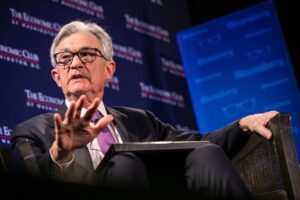 Powell’s interview with David Rubenstein, hawkish Fedspeak and the underwhelming 30-year U.S. Treasury triggered sizeable volatility in core rates this week" />
 Powell noted that the disinflationary process had begun but it struck a discord with Larry Summers’ on inflation complacency.
The Fed was not done with raising rates and ought to remain sufficiently restrictive. Waller stated that rates will be higher for longer, while Williams suggested that a terminal rate of 5.0-5.25% was still reasonable. However, after a strong NFP, Bostic expects the FOMC will need to raise interest rates to a higher peak. In short, there is a higher probability of an increase in the December SEP from 5.1% to 5.25% in March, and GS had also reduced the probability of a U.S. recession from 35% to 25%.
In Europe, the delayed German CPI unexpectedly fell to 9.2%. This reflects a 5-month low and is the third consecutive decline since the peak of 11.6% in October. This data-point came as the EuroStoxx 600 hit a 10-month high, the DAX rose to a one-year high and the FTSE 100 reached an all-time high in the prior week. This coincided with European natural gas prices falling to a 17-month low. Further volatility was trigged in Sweden after the Riksbank hiked rates by 50bp but signaled QT would begin in April, which saw SEK appreciate 2.4% and government bonds widened 23bp on Thursday.
In Asia, Chinese CPI rose by 2.1%, which reflects its fastest pace in three months and follows a spending surge after Lunar New Year celebrations, which was followed by Fitch raising its 2023 GDP forecast to 5.0% from 4.1%. Balloons and espionage remain ancillary factors that haven’t moved markets. The daily drama around the Bank of Japan’s next governor also continued. The new front-runner is Kazuo Ueda, who is a relatively unknown candidate and the debate around whether the Central Bank will scrap YCC will naturally ensue.
Emerging market sovereign credit (cash bonds) ended the week -1.4% with spreads 10bp wider. The underperformance this week simply offset the outperformance in the first week of February. The main source of underperformance was also linked to U.S. Treasuries that widened 14-20bp. Sovereign outperformers over the week were Pakistan, Papua New Guinea and Pakistan, while Ecuador, Zambia and Ukraine underperformed. EM issuance stepped up again this week and was a notable theme with 22 billion USD in supply.
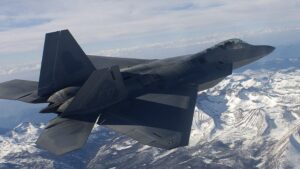 US and Canada military shoot down new unidentified object" />
US and Canada military shoot down new unidentified object
Another unidentified object has been shot down over North American airspace, Canadian Prime Minister Justin Trudeau has confirmed. He said the latest object "violated Canadian airspace" and was shot down over Yukon in north-west Canada. Both Canadian and US aircraft were scrambled to track down the object which Mr Trudeau says was taken out by a US F-22 fighter jet.
It is the third object to be shot down over North America in the last week. The American military destroyed a Chinese balloon last weekend, and on Friday an unspecified object the size of a small car was shot down off Alaska. Mr Trudeau confirmed on Saturday he gave the order and had spoken with US President Joe Biden. "Canadian forces will now recover and analyse the wreckage of the object," he wrote on Twitter. The latest unspecified object was flying over central Yukon at about 40,000 ft (12,000m) and intercepted at about 15:41 local time on Saturday, defence minister Anita Anand told reporters. She described it as "small" and "cylindrical", but that recovery efforts are still being carried out to discover more details.
Ms Anand said it was taken out "about 100 miles" from the US border, adding it posed a "reasonable threat to civil aviation". She said it "appears to be smaller than the one shot down off the coast of South Carolina" last Saturday - meaning the giant Chinese suspected spy balloon that measured 200ft (60m) tall. Posting earlier on Twitter, Prime Minister Trudeau thanked the North American Aerospace Defense Command (NORAD) which carries out air defence for the US and Canada and led the mission. The White House said the object had been tracked and monitored "over the last 24 hours". "Out of an abundance of caution and at the recommendation of their militaries, President Biden and Prime Minister Trudeau authorised it to be taken down," it said. "The leaders discussed the importance of recovering the object in order to determine more details on its purpose or origin."
President Lasso’s unexpected referendum defeat re-ignites market concerns about political risks in Ecuador
 President Lasso’s unexpected referendum defeat re-ignites market concerns about political risks in Ecuador " />
 On Sunday, February 5, Ecuadorians voted in local elections and a parallel national referendum called by President Lasso’s Administration with eight questions on various political/social topics.
All eight questions were rejected by voters and the left-wing party associated with former President Rafael Correa emerged as the big winner in local elections, capturing the mayorships of Quito, the capital, and the main commercial center Guayaquil.
Gramercy commentary: Market expectations pointed to President Lasso prevailing on at least some of the referendum questions, which was seen as a potential avenue toward easing Lasso’s domestic political challenges related to a lack of governability and an extremely difficult relationship with a left-leaning national assembly. Now that the referendum has backfired, investors have grown concerned again about the prospect of a return to power by the populist party of former President Rafael Correa and even the risk of Correa’s potential return to the Ecuador from his exile in Belgium since 2017. We see such concerns as pre-mature at this stage.
Although, there are a couple of theoretical scenarios in which Lasso is forced to quit the Presidency that would trigger credit negative early elections in the current context, our base case is that the Administration will be able to finish its term and remain in office until 2025. This should catalyze a gradual reassessment by markets of medium-term political and credit risks in Ecuador, in our view. Our outlook may change if we were to see increasing social pressures on Lasso to step down, especially renewed violent street protests like the ones that erupted in the summer of last year, paralyzing economic and political life in the country.
 Pakistan and IMF hold talks on pending review" />
Pakistan and IMF hold talks on pending review
The Government hosted an IMF mission over the last two weeks where parties negotiated progress on key measures to complete the pending 9th review and associated 1.1 billion USD disbursement.
The authorities have allowed for greater FX flexibility, gradually begun to increase energy costs, and put forward actions to achieve fiscal adjustment. Authorities have reported constructive dialogue despite mixed press on the status of the progress. Bonds were up 2-3 pts on the week on speculation of a pending Staff Level Agreement (SLA).
Gramercy commentary: At a minimum, we anticipate a constructive press release to be published by the IMF highlighting the nature of the discussions with the possibility for an SLA. Even if an SLA is not yet announced on the back of this visit, our base case remains for eventual near-term resumption of the program and bilateral financing, which should help to bridge the financing gap between now and the elections taking place likely later this year. With that being said, the balance of payments remains quite fragile which leaves prospects for volatility elevated. A more structural solution is only likely after elections, catalyzing more meaningful recovery in asset prices.
Stay up to date
More Newsletter to Check



SUBSCRIBE TO NEWSLETTER
Subscribe to download our daily economics and business roundup


×
![]()