
China Estimates Covid Surge Is Infecting 37 Million People a Day


China Estimates Covid Surge Is Infecting 37 Million People a Day
Virus unleashed in China after three years of keeping it out.
That is quite a number. What is not clear, however, is the severity. Measures of pressure on the health system, including hospitalizations, are far from comprehensive. Yet they will be key in determining whether the government in China continues with its current approach, reverts to lockdowns or makes better use of mRNA vaccines.
Nearly 37 million people in China may have been infected with Covid-19 on a single day this week, according to estimates from the government’s top health authority, making the country’s outbreak by far the world’s largest. As many as 248 million people, or nearly 18% of the population, likely contracted the virus in the first 20 days of December, according to minutes from an internal meeting of China’s National Health Commission held on Wednesday, confirmed with people involved in the discussions. If accurate, the infection rate would dwarf the previous daily record of about 4 million, set in January 2022.
The 37 million daily cases estimated for December 20 is a dramatic deviation from the official tally of just 3,049 infections reported in China for that day. It is also several times higher than the previous world record for the pandemic. Global cases hit an all-time high of 4 million on Jan. 19, 2022, amid an initial wave of omicron infections following its emergence in South Africa, according to data compiled by Bloomberg. The scale of infection suggested by the official estimates underscores the challenge China faces after it abruptly pivoted from the Covid Zero regime that largely kept the virus at bay for the past three years. Hospitals in major Chinese cities including Beijing and Shanghai have been overwhelmed with a sudden surge in patients, while crematoriums struggle to handle the onslaught of deaths.
Apple’s business under growing threat from China’s Covid wave

Supply chain experts warn outbreak following reversal of zero-Covid curbs creates uncertainty for iPhone maker
Apple’s business is under threat from a widespread coronavirus outbreak in China, with supply chain experts warning of a growing risk of months-long disruption to the production of iPhones. The US tech giant has had to contend with more than a month of chaos at its main assembler Foxconn’s mega factory in Zhengzhou, China, known as “iPhone City”, following a Covid-19 outbreak that started in October. Foxconn has moved some of its production to other factories across China, while Apple has worked with components suppliers to alleviate unusually long wait times — about 23 days for customers buying high-end iPhones in the US, according to research by Swiss bank UBS.
As the Chinese government reverses its zero-Covid policy, a longer-lasting risk now looms: the potential of worker shortages at component plants or assembly factories across the country. Apple warned on November 6 of “significant” disruption ahead of the holiday season. The rare statement came less than two weeks after executives forecast subdued sales growth in the crucial period around Christmas, of below 8%.
The consensus among analysts is that company revenues this quarter will fall just below the record 123.9 billion USD it achieved over the same period last year, with net profits projected to tumble more than 8%. That would break a 14-quarter revenue growth streak as Apple experiences a shortage of between 5 million and 15 million iPhones.
Many analysts had initially raised forecasts for the following six months, assuming that unfulfilled orders would be postponed rather than cancelled. But the risks to Apple’s revenues for 2023 have increased as modelling has shown 1 million Chinese people are at risk of dying from Covid during the coming winter months after President Xi Jinping removed strict pandemic controls. One Apple store in Beijing’s main shopping district had to cut hours last week because all its workers were sick.
A fifth of Apple’s revenue comes from sales in China, while more than 90% of iPhones are assembled there. Smartphone rival Samsung exited China in 2019 and has diversified assembly in at least four countries.

Tesla shares lose $85bn in market value over brutal week
Stock down 18% over past five days on doubts about Musk’s share sales and EV consumer demand.
Tesla stock has registered its worst week since the onset of the pandemic in March 2020, losing 85 billion USD in market value in a reflection of investors’ doubts about the electric carmaker’s prospects as chief executive Elon Musk runs Twitter at the same time. Shares in Tesla closed at their lowest point in more than two years on Friday, taking its market capitalisation below 400 billion USD. The stock has lost 18 per cent this week. Tesla was worth 1.2 trillion USD at the beginning of the year. The drop of more than 800 billion USD in value is equal to the combined current market capitalisation of more than 80 of the smallest companies in the S&P 500 index, according to S&P Global Market Intelligence. The carmaker’s market cap this week slipped below that of ExxonMobil, a company reliant on fuelling internal combustion cars.
Downward pressure on Tesla’s stock has intensified in recent months because of Musk’s own heavy selling to fund his $44bn takeover of Twitter as well as mounting concerns about the outlook for sales of its cars. Tesla’s share price dropped 9 per cent on Thursday after the company said it would offer price discounts of 7,500 USD to US consumers on two of its best-selling models, an announcement that sparked worries over consumer demand. Later that day, Musk promised via Twitter he would not sell any more of his Tesla stake for at least a year. He also said he was open to the idea of buybacks.
“I won’t sell stock until, I don’t know, probably two years from now. Definitely not next year under any circumstances and probably not the year thereafter,” he said. Musk, who recently lost the position of world’s richest man, has sold almost 23 billion USD of stock since announcing his 44 billion USD acquisition of Twitter. Despite a promise in April to stop doing so, he subsequently sold shares on three occasions, most recently last week. The disposals have angered big investors who feel the entrepreneur has abandoned the carmaker to focus on his new purchase.
Musk has promised to step down as chief executive of the social media platform once he finds a replacement following a poll of Twitter users on Sunday on the issue. Wedbush Securities tech analyst Dan Ives, on Friday lowered his price target from 250 to 175 USD for the shares but maintained an “outperform” rating. Tesla’s stock closed 1.8 per cent lower at 123.15 USD on Friday.
Ives tweeted: “We believe if Musk refocuses back on Tesla, truly stops selling stock (walk the walk, not just talk the talk), the Board initiates a buyback, and 2023 guidance is set conservative on its [fourth-quarter] call in January then this stock has bottomed in our opinion and works from here.” Of the 41 Tesla-following analysts tracked by Refinitiv, four have “sell” ratings on the stock.
The drama surrounding Musk has helped make Tesla the most profitable US company for short sellers this year, delivering paper profits of just over 15 billion USD in 2022. Short sellers aim to profit from share price falls. Since August, short sellers have increased their total short positions in Tesla by about a third to 81.8 million shares, or about 3% of the carmaker’s outstanding stock, in a wager that is worth roughly 11.3 billion USD.
Fed’s inflation fight becomes trickier as cost of services climbs.
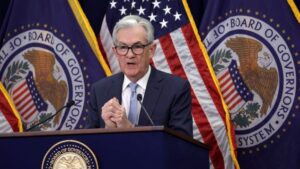
Economists warn price rises to remain above central bank’s 2% target in 2023.
Persistently high US inflation will be difficult to squelch after taking root in the services sector of the economy, it is expected that the Federal Reserve will be forced to press ahead with further interest rate rises in 2023. After a year of skyrocketing consumer prices, the US inflation rate is poised to decline rapidly next year. But many economists caution underlying pressures will keep it at levels well above what the Fed considers palatable.
“The risk of confusion here is that this is going to sound on the one hand like massive progress and it’s going to feel like maybe we can relax,” said Jean Boivin, the former deputy governor of the Bank of Canada who now heads up the BlackRock Investment Institute. “But those numbers at the end of year will be nowhere near the zip code of [what] the Fed will be comfortable with.” The US central bank has aggressively raised interest rates this year in an attempt to stamp out high inflation. But its task has become trickier because of a divergence between price trends for good and for services.
Inflation tied everyday goods such as furniture, used cars and appliances is in decline. Prices for such items had soared early in the pandemic as demand surged and manufacturing and shipping were disrupted. Recent data suggest the trend has started to reverse and is likely to continue in 2023 as retailers mark down bloated inventories. Housing costs are also likely to cool, economists say. Surging mortgage rates linked to the Fed’s rate rises have pushed down home prices. New leases for rental properties are off their recent peaks, with asking rents registering the largest monthly drop in the seven years since real estate company Zillow began tracking the data.
How persistent services inflation turns out to be depends chiefly on the labour market. Amid a worker shortage and buoyant consumer demand, employers have had to boost pay and benefits to keep pace. Compared to November of last year, wages are up 6.4%, data from the Atlanta Fed show. Fed officials have conceded its efforts to bring down inflation will involve job losses, but they maintain a recession can be avoided. Most officials expect the economy to expand just 0.5% next year and for the unemployment rate to rise nearly a full percentage point to 4.6%. It is expected that the economy will tip into a recession next year while inflation declines to just under 3% by the end of 2023. The prospect of being blamed for job losses puts the Fed in this horrible position of having to look like it’s against the labour market.
Officials maintain they can get inflation under control by raising the benchmark federal funds rate to between 5% and 5.25% next year and maintaining that level at least through 2024 — a view that is at odds with current market pricing, which suggests the central bank will not have to lift its policy rate above 5% and will deliver roughly two rate cuts by the end of next year. Powell has also warned the Fed may need to be even more aggressive if the data do not co-operate, given their unwavering commitment to get inflation back down. One concern is the potential impact from China reversing its zero-Covid policy, which some economists warn may unleash another round of commodity price increase.
“Without price stability, you’ve got nothing,” said Stephen Cecchetti, an economist at Brandeis University who previously led the monetary and economic department at the Bank for International Settlements. “You don’t have general economic stability and prosperity. You don’t have financial stability. You’ve just got chaos.”

World Cup Lifts Argentina’s Economic Mood
Argentina’s dramatic World Cup win last weekend not only gave the country a long-sought third title, but also opened a period of rare popular euphoria that could translate into positive expectations for a crisis-prone economy.
Such expectations however may be misplaced. Experts agree that mood bumps like this typically don’t have a massive impact on aggregate figures. Our colleague Augusta Saraiva recently reported that while Argentina was better placed than France to reap the economic benefit of winning sports’ most precious prize, the impact is likely limited to an extra 0.25 percentage point of economic growth in the two quarters following the tournament. Officials in Buenos Aires agree the triumph will probably add only a minor boost to growth, thanks to increased consumption.
But regardless of the measurable impact of the win in a country were football is followed like religion, the World Cup victory adds to an incipient improvement in economic mood as the country approaches presidential elections set for October. Part of that brightening is tied to some recent good news outside the world of sports. The nation’s economy is expected to grow over 5% this year, November’s monthly inflation data was the lowest since February, and the International Monetary Fund’s board just approved the latest revision of the country’s $44 billion program.
Of course, Argentina’s macroeconomic framework continues to be unsustainable, with annual inflation close to 100%, interest rates at 75%, the country locked out of international credit markets and multiple exchange rates complicating day-to-day transactions. And an expected slowdown in growth next year will add to the economic hardship, with poverty hitting around 40% of the population. Add to that a fraught political environment ahead of the coming campaign, one exacerbated by Vice President Cristina Fernandez de Kirchner’s conviction on fraud charges, and you have a recipe for more instability.
“The strong deterioration of the macroeconomic context, with inflation near three-digit levels, might be generating a higher tolerance for reforms,” Pilar Tavella, an economist at Barclays Plc, recently wrote in a research note. “Chances of political change seem high regardless of candidacies.” As always with Argentina, those policy changes can come as fast as a Lionel Messi dribble.
Stay up to date
More Newsletter to Check


SUBSCRIBE TO NEWSLETTER
Subscribe to download our daily economics and business roundup


×
![]()