
The Central Bank of Egypt (CBE)’s decision came along with Zilla Capital expectations by raising the interest rates by 300 basis points last Thursday afternoon in the last meetings of 2022

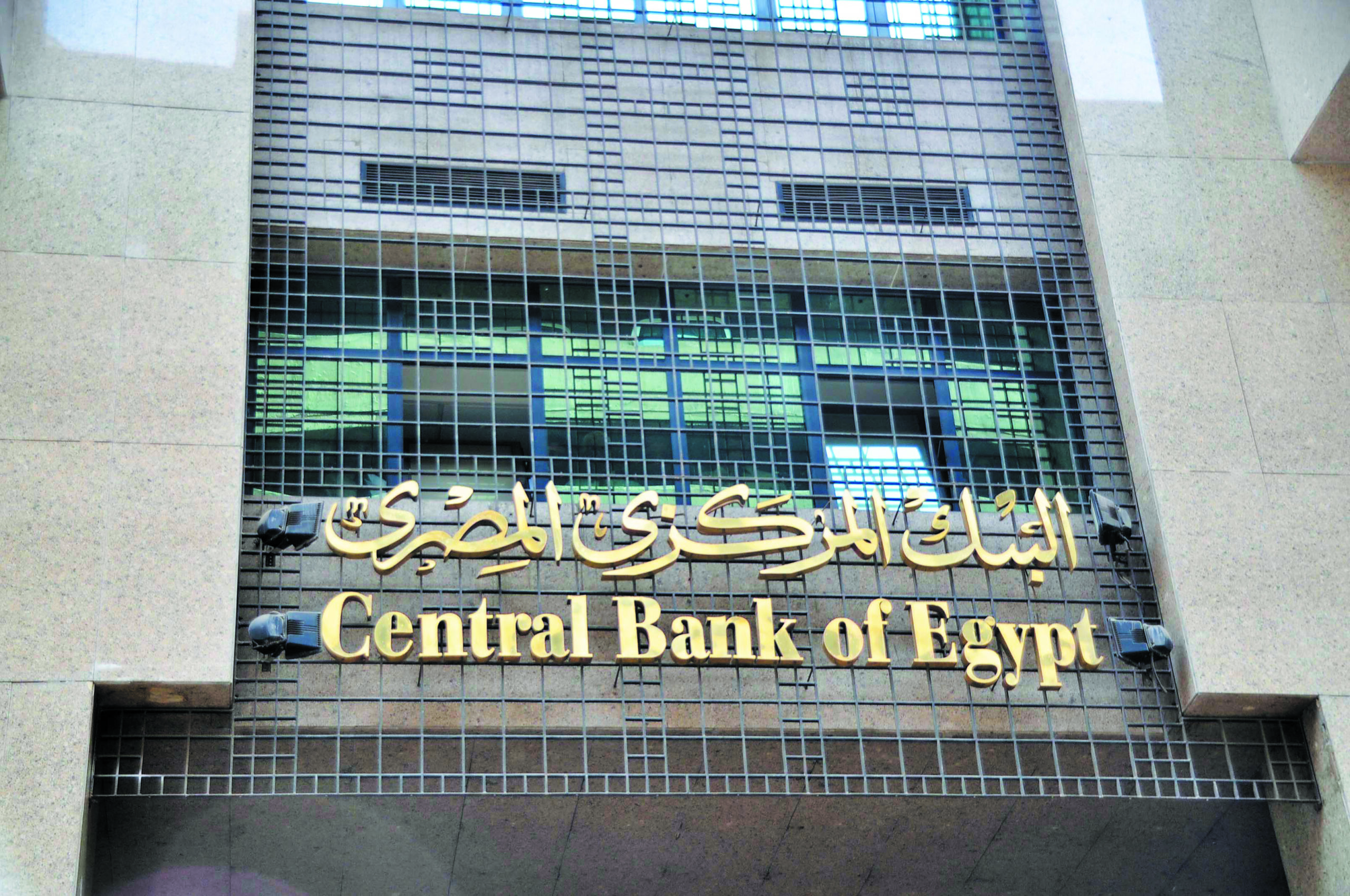
The Central Bank of Egypt (CBE)’s decision came along with Zilla Capital expectations by raising the interest rates by 300 basis points last Thursday afternoon in the last meetings of 2022. It is noteworthy that Zilla Capital expected that the CBE will raise the interest rates by 200 basis points or more. The hike is more of a signaling exercise, showing CBE is maintaining its tightening monetary stance. It’s noted that CBE has already delivered significant tightening by cancelling the 8% subsidised lending scheme, in addition to a 200bps policy rate hike in Oct, but might still need to signal even more tightening, in light of the recent significant rise in inflation expectations, on USD weakness in the parallel market. Our previous projections for inflation were for it to peak at 23% in 1Q23; we now clearly see further upside risks that would take peak inflation closer to 25%; hence, justifying further tightening down the line. (Zilla Capital)
- At current levels in the official market, we estimate the EGP is already 16% undervalued
At EGP 30 to the dollar, the EGP would be 32% undervalued and would approximately match the peak of the 2016 devaluation. It is worth noting that once letters of credit requirements are eased – we would tend to think the range of EGP28/29 could be a potential target price for the currency. We acknowledge, though, that figuring out a clearing rate at this stage is a tough exercise, as a lot will depend on how much liquidity CBE will manage to raise, the timing of its next move on the FX, as well as global market conditions. Accordingly, the suggested range of EGP28/29 is more of a guidance for future EGP valuation, rather than an actual forecast for the currency. (Zilla Capital)
- The government’s import controls could be coming to an end before the end of the month
Authorities have pledged to scrap the requirement for businesses to use letters of credit to finance imports by the end of this month as part of its agreement with the IMF to transition to a flexible exchange rate. The IMF mission chief for Egypt said that the Fund will be watching closely in the new year to assess whether the country has transitioned to a fully floating exchange rate. Egypt agreed to “permanently” adopt a flexible exchange rate in return for obtaining a USD 3 billion loan from the IMF. (Al Mal)
- State-owned companies will start selling discounted goods to the public from the beginning of January under a directive issued by the prime minister last Thursday
This came during a meeting with the supply and local development ministers, who will work with the Interior Ministry and military-owned companies to provide discounted goods until the end of Ramadan in April. Inflation is set to accelerate in the new year. Adopting a flexible exchange rate is going to mean a more intense spell of inflation, heaping pressure on people on lower incomes. (Al Mal)
- Energy companies can bid for 12 new oil and gas exploration blocks in the Mediterranean and Nile Delta starting next week in an international tender set to be launched by state-owned Egyptian Natural Gas Holding Company (EGAS)
The door for bidding will close five months from the tender’s launch. Oil Minister Tarek El Molla had told the news service earlier this month that Egypt plans to hold a fresh international tender for oil and gas exploration before the end of the year, adding that it will cover concessions in the Mediterranean and the Western Desert. He also suggested in November that the tender would cover concessions in the Eastern Desert, where the ministry had also been planning to launch a second international tender for minerals other than gold before the end of the year. (Bloomberg Asharq)
- Egypt replaces Russia as fertilizer supplier to Europe with 1.5 billion EUB exports
Egypt has replaced Russia’s place as a supplier of fertilizers to the European markets, with exports worth €1.5 billion in the first 10 months of 2022. Egyptian exports of fertilizers to Europe in the 10-month period grew from 521 million EUR in the same period of 2021 due to the sanctions imposed on Russia because of the war in Ukraine, resulting in an unprecedented increase in the prices of natural gas in Europe. (Asharq Business)
- Egypt to open outlets selling affordable commodities in January ahead of Ramadan
Egyptian Prime Minister Mostafa Madbouly has directed the Ministry of Supply and Internal Trade to begin opening outlets selling commodities at affordable prices, in addition to launching Ahlan Ramadan fair, as of January 1st until the end of the holy month of Ramadan. Madbouly stressed the importance of coordinating with all governorates to provide the required places for setting up the outlets and storehouses. He also noted that the government would offer all possible support to increase the number of storehouses, in cooperation with relevant authorities working on the establishment of outlets. (Hapi Journal)
- Pachin’s EGM approves delisting GDRs from LSE
The extraordinary general meeting (EGM) of Paints and Chemical Industries (Pachin) (PACH) approved the delisting of the company’s global depository receipts (GDRs) on the London Stock Exchange (LSE), according to a filing to the Egyptian Exchange (EGX) on December 21st. In October 1997, Pachin’s EGM approved offering 26.67% of the company’s capital on the LSE as GDRs. (Hapi Journal)
- Tanzania starts 1st fill of Julius Nyerere Dam's reservoir
Tanzanian President, Samia Suluhu Hassan, gave the green light to close the diversion tunnel at the Julius Nyerere Hydropower Project (JNHPP), redirecting the Rufiji River back to its mainstream through the lower gates of the Julius Nyerere Dam, enabling the first fill of the dam's reservoir. The tunnel's closure took place after water-impounding works were completed by a consortium of the Arab Contractors and Elsewedy Electric (SWDY). (Al Mal)
- Three consortiums of local and international companies have qualified to bid for the 1.6 billion EUR project to convert Alexandria’s Abu Qir railway into an underground metro
The qualified bidders include a consortium of our friends at Orascom Construction and UK rail infrastructure firm Colas Rail, an Alstom-Arab Contractors alliance, and a group of unnamed Chinese companies. The Transport Ministry will look into the financial and technical bids in March, according to the sources. The European Investment Bank and the European Bank for Reconstruction and Development are investing a combined 1 billion EUR in the project, noting that the government will finance 15% of the cost. (Amwal Al Ghad)
Stay up to date
More Newsletter to Check


SUBSCRIBE TO NEWSLETTER
Subscribe to download our daily economics and business roundup


×
![]()