
EU reaches deal to impose $60 cap on Russian oil exports


EU reaches deal to impose $60 cap on Russian oil exports
Poland drops objections after Brussels pledges to work on new package of sanctions against Moscow
EU member states have agreed to implement a $60 ceiling on global purchases of Russian oil after Poland dropped its objections to the long-debated deal aimed at denting the Kremlin’s fossil-fuel revenues. Warsaw had delayed agreement on the cap after demanding a lower ceiling to further erode Moscow’s income. Its backing means the bloc will have the initiative in place before today, when a ban on imports of Russian seaborne oil into the EU comes into force.
The cap, which is set to be adopted by G7 countries and some allies, is designed to keep Russian oil flowing to countries such as India and China, but at a lower profit to Moscow. It is intended to have global reach because Russian oil importers, who rely on insurance cover and shipping services from companies based in the EU and other G7 countries, would need to observe the price ceiling. However, Russia has said it will not sell oil to any country participating in the cap, and India and China have so far not said they will implement it. Russia is expected to rely on tankers prepared to operate without western insurance, though traders have warned its exports may drop if it cannot access enough vessels. Russia’s oil is already trading at a large discount to international benchmark Brent.
US Treasury secretary Janet Yellen, one of the forces behind the price cap plan this year, welcomed the agreement and commended Washington’s partners in the EU, saying it would “help us achieve our goal of restricting Putin’s primary source of revenue for his illegal war in Ukraine while simultaneously preserving the stability of global energy supplies”. The cap is lower than the European Commission’s initial suggested price of as high as $70, following demands from Poland and other member states for it to be reduced. On Friday, benchmark Brent crude was trading at about $86.
Warsaw gave their approval after Brussels agreed to speed up work on a new package of sanctions against Moscow, which would include measures proposed by Poland. “We wanted to be absolutely sure . . . that we are working on a new, painful, expensive for Russia, package of sanctions,” Sadoś said. The cap agreement also includes a provision that the ceiling be regularly reviewed to ensure it is “at least 5 per cent” below average market prices for Russian oil. The price-capping initiative has been championed by the US, which is keen to ensure Russian oil continues to be exported to avoid a global shortage that would spark a surge in crude prices. The US hopes India and China will still be able to use the existence of the price cap to negotiate larger discounts. The new price cap would particularly benefit low- and medium-income countries that have “already borne the brunt” of energy and food price inflation caused by Russia’s invasion.
Russia said it “will not accept” the price cap on its oil imposed by the West. On Friday diplomats from the EU, the G7 and Australia agreed to cap Russian oil at $60 per barrel in an attempt to squeeze Russia’s revenues. Dmitry Peskov, the Kremlin’s spokesman, said Russia had prepared for the cap. Volodymyr Zelensky, Ukraine’s president, called the policy “weak”, saying it would not cause “serious” damage to Russia.
UK crime agency arrests wealthy Russian businessman at London home

58-year-old man and two others held by NCA’s anti-kleptocracy unit.
A wealthy Russian businessman has been arrested at his multimillion-pound London home by officers from the National Crime Agency on suspicion of money laundering. The 58-year-old man was arrested on Thursday by officers from the NCA’s anti-kleptocracy unit and is also suspected of conspiracy to defraud the Home Office and conspiracy to commit perjury, the NCA said in a statement. A 35-year-old man who works at the premises was arrested nearby on suspicion of money laundering and obstruction of an NCA officer after he was seen leaving the premises with a bag containing thousands of pounds in cash, according to the agency. A third man, aged 39, was arrested at his home in Pimlico, London, for offences including money laundering and conspiracy to defraud. The NCA said he is the former boyfriend of the businessman’s current partner.
Investigators interviewed all three and released them on bail. Some 50 officers were involved in the operation at the businessman’s London property, and searches revealed a significant sum of cash as well as a number of digital devices, the NCA said. The operation is one of a number of probes by the agency’s new combating kleptocracy cell, set up in July to tackle corrupt elites and Kremlin-linked individuals laundering their assets in the UK. The NCA has also targeted high-value asset sales used to disguise the movement of wealth via auction houses, it said.
It is worth mentioning that since Russia’s full-scale invasion in February, the UK government has frozen the assets of 120 Russian entities and more than 1,200 individuals linked to the Kremlin, including Roman Abramovich, former owner of Chelsea Football Club, and Alexei Miller, chief executive of energy company Gazprom.
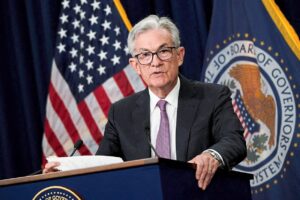
Powell and the markets talk past each other
The Fed needs the markets to help it bring down high inflation, but they tend to hear only what they want to hear.
Markets surged on Wednesday after Jerome Powell, the Federal Reserve chair, indicated that the world’s most powerful central bank would slow the pace of rate increases this month. The fact that this remark was balanced by warnings about the uncertain outlook for inflation and policy proved irrelevant for markets. All that they heard was the good news. This is far from comforting for a Fed that still needs the markets to help it bring down high inflation. It also does not help counter the political pressures it faces for failing to respond to inflation on a timely basis nor the risks of tipping the economy into a recession that would hit the most vulnerable segments of the population particularly hard. The conversation between Powell and financial markets, you may get a good feel for two things: why the Fed faces, and will continue to face, a tricky communication challenge that is consequential for the well-being of the US and global economies, and why it confronts what will be an intensifying political challenge.
Moreover, for the week ahead, other than the FIFA World Cup progressing to the last sixteen, the calendar for the next week is appropriately busy. The EU sanctions on Russian oil are due to take effect on Monday (capped at $60/bbl), but the larger event is with OPEC+ on Sunday. There had been speculation of possible cuts, which have also been rejected by just as many sources. China will publish CPI data along with the Caixin Service PMIs, which come after disappointing NBS PMIs but upbeat Caixin Manufacturing results. Major interest rate decisions are due from the RBA (2.85%), followed by Chile (11.25%), India (5.9%), Kazakhstan (16.0%), Peru (7.25%) and Ukraine (25.0%). The language around the BCCh and easing policy in 2023 could be the main EM market mover. Then Turkish and Russian inflation updates will be watched after Eurozone CPI had already shown strong signs of slowing. The inflation releases out of Brazil and Mexico are already on a moderating path, but the key will be any significant miss that could alter the central banks current projections.
Saudi FX liquidity injection for Turkey supports “muddle through” scenario until 2023 elections

Saudi Arabia’s ministry of finance confirmed that talks with the authorities in Ankara are in final stages toward depositing $5bn at the Central Bank of Turkey (CBRT).
A fresh inflow of a sizable hard currency liquidity from Saudi Arabia will go a long way in supporting President Erdogan’s strategy to muddle through without triggering a serious economic crisis until crucial presidential and legislative elections, which are expected to be held by June 2023. In this context, we expect distortionary economic policies targeting stronger GDP growth to become even more aggressive in the next few months until elections. Securing ad-hoc financing from external donors such as the Saudi multi-billion deposit at CBRT or rumored deferral of payments for Russian gas imports would be critical for Turkey’s economic outlook and Erdogan’s political prospects in the near term.
As a reminder, the CBRT already relies on significant currency swap lines with the other Gulf financial powerhouses Qatar and UAE. Such bi-lateral liquidity arrangements are unlikely to improve anything in Turkey’s distorted macroeconomic framework but will help greatly with plugging the economy’s short-term external funding gap amid relentless growth-promoting policies and a widening current account deficit. Saudi’s financial support for Ankara comes on the heels of a recent constructive meeting between the crown prince Mohamed Bin Salman and President Erdogan that appeared to put the problematic “Khashoggi chapter” behind the two leaders, as well as improve relations between Turkey and Egypt, a key Saudi regional ally. We expect Erdogan’s regional geopolitical “charm offensive” to continue in the pre-election period and help him finance highly expansionary economic policies at home. Recent security developments domestically also are likely to have favorable repercussions for the incumbent president, which helps confirm our view that the odds of Erdogan’s re-election next year are on the rise.

China is facing protests against stringent COVID policies, further setting the stage for gradual adjustment into 2023
Social unrest broke out last weekend across several cities in China following more lockdowns amid higher cases and a deadly apartment fire where response time was possibly hindered by COVID regulations.
The protests have focused on discontent associated with the current restrictions, with a minority calling for Xi’s removal from power. Officials have continued to fine-tune their narrative on zero-COVID policy (ZCP) and tweak associated measures in the aftermath of the Party Congress in October. Meanwhile, November PMI data remained in contractionary territory with softness in new export orders as well as an uptick in delivery times.
In our view, the protests are supportive to gradual ZCP evolution although they are not a game changer on their own. Furthermore, we do not see a material threat to Xi’s consolidated power post Party Congress as authorities’ have largely been able to contain unrest thus far and protests, specifically against Xi, have been limited. In the near-term, we think that the government will continue to prioritize its credibility and challenges to the healthcare system at the national level, keeping conditions relatively tight and promoting vaccination through the winter. At the same time, moderate adjustments to measures should also continue with an emphasis for optimization at the local level. Our base case remains that by spring of 2023, gradual improvement in immunity, social discontent towards ZCP, and strained economic conditions with limitations of effectiveness of additional liquidity measures should drive a more meaningful pivot to a flexible approach.
Stay up to date
More Newsletter to Check



SUBSCRIBE TO NEWSLETTER
Subscribe to download our daily economics and business roundup


×
![]()