
Most Federal Reserve officials back slower rate rises ‘soon’

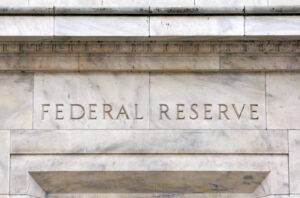
Most Federal Reserve officials back slower rate rises ‘soon’
Policymakers prepare for ‘downshift’ to 0.5 percentage point increase but warn of more pain to come.
A “substantial majority” of Federal Reserve officials support slowing down the pace of interest rate rises soon, even as some warned that monetary policy would need to be tightened more than expected next year. Minutes from the November meeting, at which the Fed raised its benchmark rate by 0.75 percentage points for the fourth time in a row, suggested officials are committed to ploughing ahead with their campaign to stamp out elevated inflation. However, the account also signalled that officials are prepared to start raising rates in smaller increments while they assess the economic effect of the most aggressive tightening campaign in decades.
“A slower pace in these circumstances would better allow the committee to assess progress toward its goals of maximum employment and price stability,” according to the minutes. The latest account showed some Fed officials believe they will have to squeeze the economy more than they initially expected because inflation had shown “little sign thus far of abating” — even if they get there with smaller rate rises. A few also argued it could be “advantageous” to wait to slow the pace of rises until the policy rate was “more clearly in restrictive territory” and that there were clearer signals inflation was slowing.
However, in a sign of divisions among policymakers, others warned there was a risk that the cumulative effect of rate rises could “exceed what was required” to bring inflation under control.
The release of the Fed minutes gave further impetus to US stocks. The S&P 500 ended the session up 0.6%, while the technology-heavy Nasdaq Composite gained 1%. In government bond markets, the yield on the 10-year US Treasury note, seen as a proxy for global borrowing costs, slipped 0.06 percentage points to 3.7%. The policy-sensitive two-year yield fell 0.04 percentage points to 4.48%. Both yields, which move inversely to the debt instruments’ prices, had been broadly flat in the lead-up to the publication of the minutes. The dollar extended its declines in New York afternoon trading, losing 0.9% against a basket of six peers.
Following the most recent rate decision, the federal funds rate now floats between 3.75% and 4%, a level that top officials say will begin to more directly curb demand and damp consumer spending. Because rate rises take time to feed through to the economy, Fed policymakers have proposed “downshifting” to half-point rate rises as soon as the next meeting in December, when their campaign to tighten monetary policy will enter a new phase.
According to the minutes, officials engaged in a long debate about the delayed effects of tighter monetary policy. They noted that interest rate-sensitive sectors such as housing had adjusted quickly, but that the “timing of the effects on overall economic activity, the labour market, and inflation was still quite uncertain”. At a press conference earlier this month, chair Jay Powell said the level at which the fed funds rate tops out will surpass the 4.6% level expected by most Fed officials just a couple of months ago. His warning of a higher “terminal rate” came amid mounting evidence that price pressures are becoming embedded in a broader range of goods and services even as the pace of consumer price growth eases.
US employers slow down hiring before holiday shopping rush
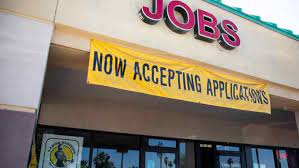
Bargaining power shifts away from applicants as retailers forecast weaker sales growth.
US businesses are hiring fewer seasonal workers this holiday shopping season, as stubborn inflation dims the outlook for retail sales. Employers posted 8.2% fewer holiday openings this year than last year, according to jobs site Indeed. The decline came even as Indeed reported that searches for seasonal jobs rose 33% this year over 2021 to their highest level since 2019. Macy’s and Walmart have said they plan to hire thousands fewer holiday workers than they did last year. Walmart, which is adding 40,000 people this season compared to 150,000 for the same period of last year, said because it recruited aggressively earlier this year. A year ago, retail employers confronted severe labour shortages while consumers, flush with savings built up during the coronavirus pandemic, opened their wallets. But total employment has since ticked up, suggesting less need for temporary workers. In October government statisticians counted 15.8 million workers in the retail trade, up 1.9% from 15.5 million in the same month in 2021.
The National Retail Federation has also forecast a spending slowdown, predicting that holiday retail sales would grow 6-8 per cent year-on-year to between 943 billion-960 billion USD in 2022. That would exceed the average growth rate seen over the past decade, but would still be below the 13.5% jump seen in 2021. With consumer prices up 7.7% year-on-year in October, it would also suggest that improvements in retailers’ headline sales figures will barely keep pace with inflation. Increasing competition for the openings that remain has allowed companies to nix hiring bonuses and other incentives to attract applicants. Wage growth for retail workers slowed to 5.1% year-over-year in September from 7.4% in January. As the labour market begins to soften, fewer US workers are resigning: 4.1 million quit in September, down 10% from a peak of 4.5 million in November 2021.

Investors pump almost 16 billion USD in to US corporate bond funds
November inflows would be highest since July 2020 after inflation data ease rate rise worries.
Investors have poured almost 16 billion USD in to US corporate bond funds this month, underscoring how signs of easing inflation have helped brighten sentiment after a brutal sell-off in much of 2022. Funds holding high-grade bonds have garnered 8.6 billion USD of new client money in the month to November 23, while those focused on riskier junk-rated debt have posted net inflows of 7.1 billion USD. The combined figure is set to be the highest monthly inflow since July 2020 if the trend holds in the final week of November, according to data provider EPFR. The surge of inflows into credit funds comes as Wall Street markets have staged a late-year rally after data released earlier in November showed the pace of consumer price growth has started to ease, prompting hopes that the Federal Reserve may soon slow down its aggressive rate rises.
Almost 5 billion USD had flowed into US corporate bond funds before the release of the consumer price index report on November 10, but a further 10.9 billion shifted into the vehicles in the fortnight that followed, EPFR data show. Corporate bonds have also rallied following the inflation report, with an Ice Data Services index tracking high-grade debt up 4.6%, trimming the 2022 fall to about 15%.
Many companies took advantage of cheap money during the stimulus-infused depths of the pandemic to refinance and issue new debt. However, the Fed has since led the charge on tightening monetary policy to curb inflation — taking US interest rates from near zero to a target range of 3.75 to 4%. In turn, concerns have intensified that the central bank and its peers will twist the screws into a recession, crimping consumer spending just as businesses face much higher borrowing costs. The CPI report, which showed the annual rate of inflated cooled to 7.7% in October from a high of 9.1% in June, has helped to provide at least a glimmer of hope that rate rises may start to slow. Markets are pricing in bets that US interest rates will peak at 5% next June before starting to fall, having previously registered as high as 5.3%.
Latin America’s stagnation ‘worse than the 1980s’, says UN official
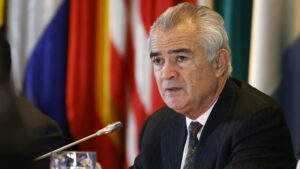
New leftwing leaders should focus on growth as well as wealth distribution, argues José Manuel Salazar-Xirinachs.
Weak investment, low productivity and inadequate education have condemned Latin America to a period of economic failure even worse than the “lost decade” of the 1980s, according to the top UN economic official in the region. José Manuel Salazar-Xirinachs, new head of the UN Economic Commission on Latin America and the Caribbean (ECLAC), said the stagnation of the past decade contrasted not only with the 5.9% annual growth of the 1970s but also the 2% achieved in the 1980s, a turbulent decade for Latin America characterised by a wave of debt crises. “This is terrible, this really ought to be a huge red light,” he said of the descent into stagnation, with average annual economic growth in the decade to 2023 set to be just 0.8%. “The challenge is how to return to this line of 5.9% a year,” he said.
Latin America has grown more slowly than almost any other part of the world over the past decade. The region was hard hit by the pandemic, suffering more than a quarter of all recorded coronavirus deaths, despite having only 8.4% of the world’s population. Salazar-Xirinachs said the underperformance was due to a lack of investment and poor education, both of which had hurt productivity. “We’re investing too little in infrastructure and we have an education system which is not delivering the talent we need in terms of numbers and quality,” he said. Yet he also stressed that spending more money on education was not necessarily the answer, noting how his native Costa Rica had boosted education spending substantially but had not seen the expected results.
Latin American countries trade less with each other than any other region, with their economies geared instead to export raw materials to the US, Europe and China. Salazar-Xirinachs wants to see a greater focus on practical measures to facilitate inter-region trade, including trade in services, rather than the grand political declarations that have characterised past efforts at Latin American integration. Trade negotiations have yielded sophisticated agreements with the US or Europe but not good regional deals. “In the past, regional integration was seen as an alternative to insertion in the world economy,” he said. “Now it’s clear that it’s more complementary. For Latin America to successfully become part of global value chains, it needs regional chains of production.”

Shanghai rocked by protests as zero-Covid anger spreads
Tensions run into second day after vigil ends with clashes with police in China’s largest city.
Protests in Shanghai escalated on Sunday evening as police struggled to disperse large crowds who gathered in the city, part of a nationwide movement that poses one of the most brazen challenges to the Chinese Communist party’s authority in decades. The unrest began on Saturday night and centred on a road named after the Chinese city of Urumqi, where a deadly fire on Thursday killed ten people. That incident, in the northwestern Xinjiang region, fuelled social media outrage and prompted a series of vigils around the country, as people blamed coronavirus restrictions for the tragedy — allegations that the authorities denied.
After clearing the protest in the early hours of Sunday morning, crowds returned in the afternoon. People continued to gather through the evening, occasionally clashing with police and shouting anti-government slogans. Similar clashes occurred in Xinjiang on Friday, while students across the country held rallies over the weekend, including one on Sunday at the elite Tsinghua University in Beijing. The CCP has had to contend with much larger demonstrations over recent years, in particular the mass pro-democracy protests in Hong Kong in 2019 that brought millions of people on to the territory’s streets. But in terms of its national scope and direct challenge to party authority, the gathering movement against President Xi Jinping’s signature zero-Covid policy is unprecedented since the 1989 Tiananmen Square protests. People at Saturday’s Shanghai protest chanted openly for the party and Xi to “step down”.
Under Xi’s zero-Covid approach to pandemic management, authorities have sought to eliminate the virus through frequent lockdowns. Shanghai was closed for more than two months in the spring. State media outlets said over the weekend that the government would continue to put “people and lives first” and “would not waver” from its approach.
Stay up to date
More Newsletter to Check



SUBSCRIBE TO NEWSLETTER
Subscribe to download our daily economics and business roundup


×
![]()