
Weak Service PMIs question the strength of the U.S. economy


Weak Service PMIs question the strength of the U.S. economy
However, the chorus of market participants pointing to the strength in the labor market is loud with unemployment at 3.5%, which puts even more focus on the next NFP on Friday.
Needless to say, the emphasis on Chair Powell’s remarks at Jackson Hole were the key focus of the week, with more of an emphasis on restoring credibility. Powell sounded a touch more hawkish than the July FOMC but he didn’t give-in to Bullard’s argument. Of equal importance with the move higher in gas prices, Citigroup highlighted that UK inflation is set to peak at 18.6% with RPI touching 21.4% in January.
On the other side of the economic puzzle is China’s PBoC. After the PBoC cut the MLF rate almost two weeks ago, they also cut the one-year and five-year LPR rates by 5bp and 15bp, respectively. The pressure on CNH was telling with a high of 6.88, where the CNY one-year holds the largest discount in a decade and is currently 200 pips more than the 1yr CNH forward. The tolerance to maintain a weak CNH, while deflationary for the Western world, was short lived as the daily fixings were exceptionally strong over the week and 120 pips on Tuesday alone, which is the strongest in 32 months.
Aside from weaker retail sales, industrial output and youth unemployment increasing to 19.9% (all-time high), the PBoC and central government unveiled extensive fiscal measures. Stimulus was the theme of the week in China. However, for Indonesia it was tighter policy as the central bank hiked rates by 25bp for the first time and announced its own operation twist to flatten the yield curve. The Bank of Korea followed and hiked 25bp where the rhetoric was notably more hawkish, but inflows are expected on possible WGBI inclusion.
Elsewhere, oil prices initially reacted to further concessions that the US offered to Iran in the hope of reaching a nuclear agreement, while the Saudi Arabian Energy Minister said OPEC+ might need to take action. Elections in EM were another pressing news item, just as Kenya’s President contested the recent result and filed a petition against the winning opposition candidate. Meanwhile, the incumbent President of Angola successfully warded off a challenge from the UNITA party and secured 51% of the vote.
New economic stimulus by China fails to impress markets

The Chinese authorities announced a new support package for the economy this week, allocating 1 trillion yuan (~$146BN) of new funding to economic stimulus measures.
The latest support measures come on the heels of several other recent stimulus initiatives by Beijing. Last week, the PBoC surprised markets by delivering an unexpected 10bps reduction to its policy rate, and, since June, the Central Government has funneled around 1.1 trillion yuan to development banks for various infrastructure projects. Additionally, in May, the authorities authorized 1.9 trillion yuan in a 33-point policy support package.
Despite the string of stimulus measures, market participants tend to remain skeptical that the economy can deliver GDP growth of more than 3% this year, amid the loss of economic dynamism caused by repeated lockdowns related to “zero COVID” policies and turmoil in the property market. From a global macro perspective, the ability of the Chinese economy to pick up momentum in the coming months will play a key role in defining the outlook for emerging markets in late 2022 and early next year as U.S. financial conditions are likely to continue to tighten and Europe struggles with a worsening energy crisis.
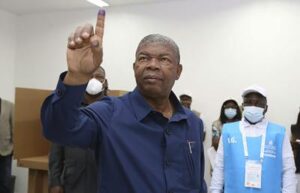
Angola’s President Joao Lourenco wins re-election
With 97% of votes counted, Angola’s incumbent President and his ruling MPLA party appear set to win the national elections with 51% of votes versus 44% for the opposition UNITA.
Joao Lourenco’s re-election preserves the general political status quo in Africa’s second largest oil producer, which could be interpreted as a credit-positive development by markets. However, the ruling MPLA seems likely to lose its absolute majority in Parliament, having seen their share of the vote decline, compared to 60% in the previous elections five years ago, and 70% in 2012. This hints at a potentially more complicated policy-making environment going forward but we do not anticipate the changes to the post-election policy agenda to be too dramatic.
Despite fears ahead of the elections, social unrest has been constrained. However, given the narrowing of results and concerns over voting methods, there is a high likelihood that the opposition asks for a constitutional review of the results. This means that the new administration’s inauguration could be delayed until the courts issue a final ruling. Nonetheless, we do not see a high probability that a potential legal challenge could overturn the results and we expect incumbent President Joao Lourenco to be sworn in for a new term.
Emerging market sovereign credit ended the week flat with spreads 3bp tighter

Outperformers over the week were Argentina, Angola and Tajikistan while Sri Lanka, Ukraine and Ghana underperformed.
It is reported that JP Morgan is running a consultation to include India in the GBI-EM index (local currency index). We would expect a decision on this by mid-October, with possible index inclusion to be phased-in over a number of months from January and ultimately up to 9.7% based off today’s index levels, weights and constituents. This would be a similar process to China’s inclusion by 1ppt per month, up to 10% (it’s current index weight). India has been on JP Morgan’s index watch since October 2021.
After a blowout NFP for July, we’ll soon have the August reading. Then if the U.S. Service PMI generated some angst, then we will soon have the European releases. Falling PMIs in China is one of the larger data releases, but slower industrial profits come against the new stimulus measures recently announced. It’s likely that inflation out of Pakistan and Sri Lanka will continue to surge, just as Mexico and South Africa appear to still be on an upward trajectory, but signs of moderation are evident in Indonesia, Poland and South Korea. Less can be said for Hungary, where the National Bank is expected to raise rates by another 100bp (10.75%).
The theme of inflation plateauing in EM is in contrast to Western Europe, but the mix of fiscal easing is a pressing concern (as it is in Poland). Indeed, Germany is set to record its highest reading in 70 years. The rise in natural gas prices in Europe comes as Gazprom reported that Nord Stream 1 is down for three-days of maintenance and uncertainty over whether gas flows with resume in September. Secondly, France’s EDF delayed the restart of its nuclear capacity until mid-November. Finally, we can expect GDP for 2Q out of Brazil, Czech Republic, India and Turkey.
Stay up to date
More Newsletter to Check


SUBSCRIBE TO NEWSLETTER
Subscribe to download our daily economics and business roundup


×
![]()