
Egypt foreign exchange reserves decline to 33.14 billion dollars

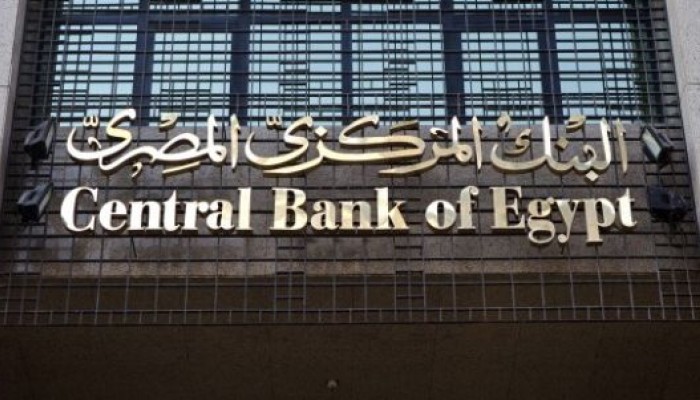
Egypt foreign exchange reserves decline to 33.14 billion dollars. The Central Bank of Egypt revealed a new decline in the country’s foreign exchange reserve balances by 232 million USD during the month of July. reserve balances amounted to 33.143 billion USD at the end of last July, compared to 33.375 billion USD at the end of June. The value of the decline in Egypt’s foreign exchange reserves declined significantly during the month of July, as it decreased by 2.12 billion USD in June, and it lost about 1.63 billion USD during the month of May. (Bloomberg Asharq)
- Head of the Pharmaceutical Division: The current increases in drug prices before the impact of raising the dollar. Losses of new pharmaceutical companies range from 5 to 30%.
Ali Auf, Head of the Medicines Division at the Chamber of Commerce and Chairman of the Board of Directors of the Arab International Group for Pharmaceuticals “AIG”, said that the rises in drug prices during the past two months are an increase for companies that submitted requests to move the prices of their products before the rise in the price of the dollar, explaining that the Medicines Authority takes about 4 months to determine the new price of the drug, and another 6 months to obtain a notification of pricing and sale of the drug at the new price. He added that he is currently studying the size of the drugs’ increase that will be decided stressing that it won’t exceed a percentage ranging from 15% to 20%. (Hapi Journal)
- Increasing the exports of pharmaceutical companies is the only solution to face the effects of inflation.
The reason for the rise in drug prices is due to the fact that 90% of the production inputs used in the pharmaceutical industry are imported from abroad and their prices rose after the increase in the dollar, in addition to the increase in shipping costs more than once at 100%. The Egyptian pharmaceutical companies are targeting foreign markets to export their products in the near future, noting that the pharmaceutical industry faces many negatives, including the need to register medicines in the exporting countries in addition to registering each medicine separately, which is the only way out. (Zilla Capital)
- Pharmaceutical companies need some support represented in arranging the dollar to import raw materials for the pharmaceutical industry.
Noting that slowing the transfer of funds abroad may result in some problems with suppliers, which prevents any payment facilities. Most pharmaceutical manufacturing companies in Egypt rely on self-financing or bank financing of their projects, stressing that the slowdown in the receipt of raw materials for a period of up to one or two months results in losses from bank interest rates ranging from 1.5 to 2%. The pharmaceutical market in Egypt is not witnessing any shortages so far thanks to the strategic stockpile, however, the continued delay in shipping imported raw materials will result in a shortage of some medicines in the coming period. (Zilla Capital)
- The business sector announces the arrival of the first shipment of modern textile machines.
The first shipment of modern spinning and weaving machines has arrived at the port of Alexandria within the project of developing companies affiliated with the Holding Company for Cotton, Spinning, Weaving and Clothing, one of the companies of the Ministry of Public Business Sector. This comes within the framework of implementing a project to develop spinning and weaving companies affiliated with the Ministry of Public Business Sector, with an investment cost exceeding 23 billion EGP, which includes modernizing machines used in factories and construction works in about 65 sites, automating work systems and training workers. (Hapi Journal)
- Minister of Environmental Yasmine Fouad signed a cooperation agreement with the European Union (EU) for a 4 million EUR grant under the Egyptian Pollution Abatement Program (EPAP).
The grant is a part of the financing for the third phase of the EPAP whose budget amounts to 145 million EUR. The program is currently preparing and executing eco-friendly and energy-efficient projects with over 200 million EUR worth of investments. It is worth noting that the EPAP is being implemented in partnership with the EU, European Investment Bank (EIB), French Development Agency (FDA), and KfW Development Bank. (Arab Finance)
- The Ministers of International Cooperation and Supply discuss an agreement to enhance food security with the World Bank, worth 500 million USD.
Egypt has started implementing a plan to expand wheat storage silos that rely on the latest technologies to preserve wheat and reduce wastage. On the other hand, the country is constantly expanding to increase the agricultural area of strategic crops, including wheat, which has contributed to enhancing its ability to store wheat and grains, and increasing efforts to achieve food security. (Arab Finance)
- Moving tour EGX and companies talks, Sipes intends to submit an offer to acquire Pachin at a price of up to EGP 18.5 per share. More than Pachin's share price at the end of today's session 14.2%.
The offer aims to acquire 100% of the issued capital of Pachin, minus the number of shares needed for the company to continue to be listed on the Egyptian Stock Exchange, with a minimum of 60% for implementation, according to the company's statement sent to the stock exchange a while ago. The company stated in its letter attached to the company's statement that the final purchase price will be paid in full and in cash to the shareholders of Pachin Company, who will respond to the compulsory purchase offer in accordance with the applicable rules. (Arab Finance)
- Huawei Technologies has signed a memorandum of understanding (MoU) with the Information Technology Industry Development Agency (ITIDA) to launch the Spark program for supporting deep-tech startups in Egypt.
The program will provide startups operating in the fields of artificial intelligence (AI), data management, gaming, and e-commerce with free access to Huawei’s cloud resources. Moreover, selected startups will have access to Huawei’s training programs for technical support. (Arab Finance)
- The Public Investment Fund (PIF) of Saudi Arabia launched the Saudi Egyptian Investment Company (SEIC) for investment in promising sectors in Egypt.
The new company will focus on various sectors, including infrastructure, real estate development, healthcare, financial services, food and agriculture, manufacturing, and pharmaceutical, along with other investment opportunities. Together with the Saudi private sector, SEIC will help to enlarge PIF’s access to investment opportunities across Egypt. (Al Mal)
- HMD Global, the owner of the Nokia brand, signed a cooperation agreement with Egypt-based Etisal for Advanced Industries (EAI) for the production of one million mobile phones of different models, including feature phones and smartphones, in 2022.
The recent agreement is a manifestation of the government’s keenness on encouraging and incentivizing the private sector to manufacture in Egyptian factories to transfer expertise and localize the electronics industry, which will develop such an important industry and create specialized jobs. (Al Mal)
Stay up to date
More Newsletter to Check



SUBSCRIBE TO NEWSLETTER
Subscribe to download our daily economics and business roundup


×
![]()