
The Saudi Cabinet issued a decision to establish the “Saudi Investment Marketing Authority”

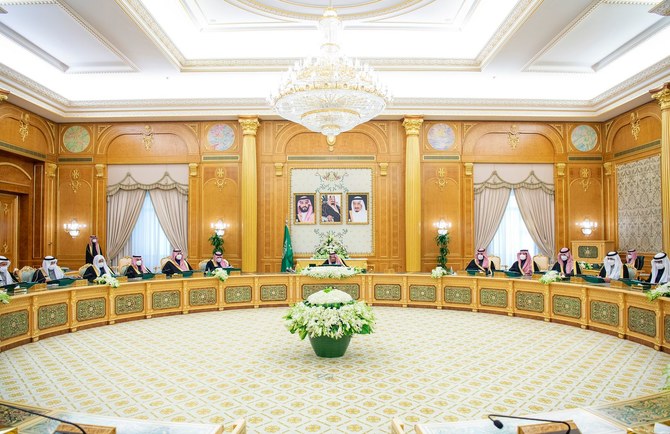
The Saudi Cabinet issued a decision to establish the “Saudi Investment Marketing Authority”, with the aim of developing and attracting Investments to the kingdom. The National Investment Strategy set a target for foreign direct investment of more than 100 billion USD annually by 2030. The establishment of the authority aims to achieve integration between government agencies, improve services and businesses related to the marketing of investment opportunities, and support partnerships between investors, in a way that enhances direct investments in Saudi Arabia. The Kingdom plans to provide incentives, develop regulations, and establish special economic zones to attract more investment, and to persuade international companies to establish a greater presence in the Saudi market. (Bloomberg Asharq)
- Banque Misr has obtained the approval of the Central Bank of Kenya (CBK) to establish there a representative office. The office will be set up under the name of Banque Misr- S.A.E – Kenya Representative Office.
The Banque Misr - S.A.E. - Kenya Representative Office is expected to play a catalytic role in strengthening the long-standing trade relationship between Egypt and Kenya. According to the Banking Act in Kenya, the representative office will act as a marketing and liaison office for the parent bank in Egypt and will not be allowed to handle banking business. (Arab Finance)
- Moreover, Banque Misr has sold its 9.98% stake in the Egyptian Financial and Industrial Company (EFIC). The Cairo-based lender sold a total of 7.26 million shares in the EGX-listed firm for 145.30 million EGP, at an average price of 20 EGP per share.
The Commercial International Brokerage Company (CIBC) acted as the broker for the transaction. During the first half (H1) of 2022, EFIC logged standalone net profits worth 247.40 million EGP, an annual leap of 562% from 37.40 million EGP. Meanwhile, the company’s sales jumped by 114% year-on-year (YoY) to 847.50 million EGP in H1-22, compared to 396.10 million EGP. (Arab Finance)
- Vitro, a leading glass producer in Mexico, is planning to build two factories in Egypt with around 400 million USD in investments.
A factory for manufacturing glass will be set up spanning 350,000 meters, while another factory will be built on a 150,000-meters land for the production of containers. The company also targets exporting most of its output from the factories. Both factories will be established as per the free zones system, and they will offer about 1,500 new jobs. (Hapi Journal)
- Egypt-based O7 Therapy has signed a cooperation agreement with Kuwait’s Boubyan Takaful Insurance Company (BTIC).
Under the first-of-its-kind agreement, both companies will collaborate to offer the Egyptian platform’s services among the health insurance services and products that BTIC provides. This deal comes in line with the initiative launched by Boubyan Bank in March 2022 to focus on mental health in Kuwait. In April, O7 Therapy announced it raised 2.1 million USD in a seed funding round to support mental health in the Middle East. O7 Therapy is an Egyptian research-based online platform that helps address a wide range of mental health difficulties and advocate for mental health and wellness. (Arab Finance)
- The Information Technology Industry Development Agency (ITIDA) has signed a memorandum of understanding (MoU) with Valeo.
Under the MoU, Valeo will work on expanding its business volume in Egypt, as well as boosting its exports of programming services. Moreover, the MoU will offer additional job opportunities for more than 850 engineers at the company’s center in Egypt. The ITIDA will also cooperate with Valeo to form a distinguished local staff through offering a specialized training in the field of programming and electronics. (Mubasher)
- Edita Food Industries (EFID) announced that it will buy back 5% of its shares during the period from August 3rd until October 3rd.
The transaction will be executed on 36.153 million shares at the market share price and will be financed through the company’s resources. Edita attributed the recent step to the decline in the price of its stock which called for an attempt to support it. It is worth noting that Edita’s consolidated net profit attributable to owners of the parent stood at 148.07 million EGP in Q1 2022, compared to 81.69 million EGP in Q1 2021. (Hapi Journal)
- Egyptian Gulf Bank’s (EG Bank) (EGBE) board of directors announced that the company will initiate procedures for increasing the issued and paid-up capital by 904.377 million EGP.
The increase includes 525.51 million EGP retained for the capital increase and 378.868 million EGP in distributable earnings. The number of new shares to be issued will be determined based on the USD exchange rate against the EGP at the date of the general assembly’s decision. (EGX)
- This is the final day for Beltone Financial Holding’s (BTFH) shareholders to subscribe to Chimera Investments’ mandatory purchase offer for Beltone.
On June 13, OFH announced that Beltone had received a mandatory purchase offer from the Abu Dhabi-based private investment firm Chimera Investments for a stake between 51% and 90% at a price of 1.485 EGP per share. (EGX)
- Moving to our economics and markets talks, the Egyptian non-oil economy has seen a downturn in economic performance in July 2022, with output and new orders falling at slower rates.
The headline seasonally adjusted S&P Global Egypt Purchasing Managers’ Index (PMI) increased marginally to 46.4 in July from a “two-year low” of 45.2 in June, the data showed. This marks the largest reading in just over a year, despite remaining below the 50.5 growth threshold which indicates a “deterioration” in operating conditions. (Arab Finance)
- Non-oil businesses in Egypt witnessed a drop in new orders' intakes at the beginning of the third quarter (Q3) of 2022, with the rate of contraction easing sharply starting from June affected by higher prices that caused a decrease in client spending.
All the four sectors covered by the survey, namely manufacturing, construction, wholesale and retail, and services, have seen a downturn in July. Moreover, businesses have cut their output levels, however, the downturn eased slightly last July as compared to June, adding that shortages in raw materials, along with lower demand, have restricted their capacity. The slip in demand is linked to inflationary pressures, despite the signs showing they started to soften after June. (Arab Finance)
- Accordingly, the increasing prices of raw materials, fuel, and foodstuff have pushed non-oil firms to raise their selling prices at a slower pace in July.
Furthermore, purchasing activity continued slipping for the seventh consecutive month driven by weaker demand and higher prices that impacted spending plan. Business outlook is likely to remain toned down for the coming 12 months, with sentiment falling sharply after hitting a five-month high in June. On the other hand, only 13% of companies expected growth of output over the next year. (Arab Finance)
Stay up to date
More Newsletter to Check



SUBSCRIBE TO NEWSLETTER
Subscribe to download our daily economics and business roundup


×
![]()