
U.S. inflation may prompt further FOMC action

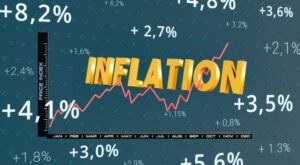
U.S. inflation may prompt further FOMC action.
Expectations are still for a 75 bp hike in two weeks, although some institutions have moved to a full 100 bp in tightening, even if the Fed’s Waller and Bullard regard 75 bps as adequate.
The implications across global markets are more telling. Recession concerns have prompted renewed USD strength and could be validated by 2Q downward earning revisions, which is a view loosely echoed by Jamie Dimon. Weaker oil prices dominated, although planned maintenance of Nord Stream 1 saw natural gas futures tick higher and kept EUR under pressure. Deutsche Bank have been quick to forecast a German recession in 2023. Mario Draghi’s surprise resignation introduces further risks. In many respects there were a handful of symbolic moves this week.
The Hungarian forint broke above 400, South African rand headed above 17, Chilean peso traded above 1000, Argentina’s blue-chip FX rate topped 300 and the Turkish lira breached 17.50. The depreciating trend in EMFX had become clearer against a strong USD as the DXY reached 109. Indeed, the euro broke through parity for the first time in two decades. The Reserve Bank of India responded in May with an emergency hike, the Philippines did so this week and the Chilean Central Bank announced an FX intervention tool of 25 billion USD to defend the currency. Other developments this week include the National Bank of Poland revising the inflation outlook higher and expecting core to peak in 4Q (10.4%) and headline to peak in 1Q (18.8%). Chinese 2Q GDP disappointed at 0.4%, which weighed on NDIRS 5-year rates which rallied 14 bps this week, which was the largest weekly move this year. To top that off, the IMF cut the U.S. growth forecast for 2022 to 2.3% from 2.9%, whilst also lowering the 2023 forecast to 1.0% (from 1.7%).
On the other hand, for the week ahead, he ECB decision next Thursday could result in rate lift-off for the first time since 2011. We also expect more details around the new Transmission Protection Mechanism, which is aimed at tempering fragmentation across the Eurozone. Prior to that, the European Union are set to unveil contingency plans should Russia choose not to resume gas flows from Nord Stream 1. The pipeline has been closed as part of a ten-day planned maintenance schedule but rallying natural gas futures suggest re-opening the pipeline is anything but a foregone conclusion. Within G10, focus will also be on the Bank of Japan given the fierce resistance to ending YCC, which caused impressive weakness in the yen. Aside from that, China’s 1-year and 5-year loan prime rate decisions are due and other updates will be coming out of Indonesia (3.5%), South Africa (4.75%), Russia (9.5%) and Ukraine (25.0%). Inflation releases will filter out across Hong Kong, Malaysia, Mexico, South Africa and Poland. Within DM equities, the theme is 2Q earnings after JPM, MS, Wells and Citi published results in the U.S. last week, however we can expect plenty more very shortly. Finally, the week will wrap-up with the Tour de France ending on the Champs-Elysees in Paris on Sunday.
Euro falls to parity with US dollar for first time in two decades
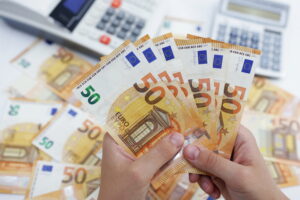
Rising recession fears and broad shift into haven assets have boosted the greenback
Deepening fears about the health of the global economy have shoved the euro down to parity against the US dollar for the first time in 20 years. Investors gravitate towards the perceived safety of the dollar in times of stress — a feature that led to a ferocious rally in the US currency when the coronavirus pandemic took root in 2020. But that shock did not drag the euro down to this point. Nor did the debt crisis that came close to dismantling the currency bloc a decade ago. Now, though, the risk that aggressive interest rate rises could tip the US into recession, combined with the likely damage to the European economy stemming from its dependence on Russian energy, has been enough to tip the euro at last 0.4% lower on Wednesday to hit the historic milestone.
The euro has fallen 16% against the dollar over the past year, and 12% in 2022. When compared with a basket of currencies from major trading partners, the euro is not notably weak. On that basis, it has dropped a modest 3.6% this year, according to a Deutsche Bank index, nestling at a five-year low. But the dollar has been marching higher. The dollar index has jumped 13% this year to its highest point in two decades, tearing into other major currencies such as the yen and sterling, and fueled by an aggressive US Federal Reserve that has been pumping up interest rates quickly to tackle inflation running at 40-year highs.
Worries about rapid Fed rate rises intensified on Wednesday after a report from the labour department showed US consumer prices rose at an annual pace of 9.1% in June, higher than the 8.8% forecast by economists. Meanwhile, Russia’s invasion of Ukraine has imposed sharp and specific pressures on the neighbouring eurozone.
Against a backdrop of surging energy prices, countries in the bloc have been rushing to source new supplies outside of Russia. Germany has even resorted to rationing gas and electricity — raising fresh worries about the severity of the situation when the colder winter months draw near. Inflation in the eurozone hit a record 8.6 per cent in June — on paper setting the scene for higher interest rates in the euro area. But business activity surveys for the region have proved disappointing in recent weeks, complicating the picture for the European Central Bank as it attempts to tighten monetary policy in the face of slowing growth.

Outlook for Sri Lanka’s sovereign debt restructuring hinges on resolution of power vacuum after ousting of President Rajapaksa
Months of street protests against President Gotabaya Rajapaksa and his Administration amidst Sri Lanka’s worst economic crisis in modern history culminated in the storming of the presidential palace by an angry mob. After being forced to initially flee to an undisclosed location, the President and his closest entourage left the country shortly thereafter. On Thursday, Mr. Rajapaksa formally stepped down from the Presidency, submitting his resignation from Singapore.
The dramatic events of the last few days have increased near-term political uncertainty in Sri Lanka as the country now faces a power vacuum, which piled additional downside pressure on an already deeply distressed sovereign bond complex. As such, the critical questions in front of investors now are how quickly a peaceful transition of power to a new interim government can be achieved and what the impact of the latest developments on ongoing negotiations with the IMF over a bailout program and creditors over public debt restructuring would be.
As a first step toward de-escalation, Parliament will vote on a new interim president on July 20. While the exit of the Rajapaksa clan (including former Finance Minister, Basil Rajapaksa, the President’s brother) from power was the key demand of months-long anti-government protests, the political and economic situation in the country remains highly complex and challenging. We think that the former President’s departure provides an opening for a gradual fading of social unrest. In that context, an orderly and relatively quick political transition could set the stage for a more constructive medium-term outlook for Sri Lanka and the debt restructuring process. Of course, an improved medium-term narrative hinge on a new government that has the willingness and ability to continue negotiations over an IMF bailout package and commit to the required difficult economic adjustments amid a highly tense social environment.
Pakistan reaches staff level IMF agreement on program resumption

The Government of Pakistan and the IMF reached a staff level agreement on the 7th and 8th reviews of its previously paused 6 billion USD EFF program. Following Board approval, Pakistan is due to receive a 1.2 billion USD disbursement. Additionally, the Fund is considering an extension of the facility, set to conclude in September of this year, to June 2023 as well as a 1 billion USD upsizing.
The development is constructive news following months of uncertainty amid political and market volatility. We expect Board approval to occur within the coming weeks, paving the way for the release of funds helping to cover the country’s external financing needs. We think the Fund could grant the extension particularly in the event of solid performance upon the next review. This will be a function of the willingness and ability of authorities to execute in the backdrop of tough political, economic, and social conditions, combined with the evolution of current external stressors.
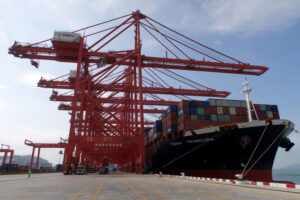
China trade data robust despite concerns of softening external demand; housing crisis lingers
Last month, exports grew 17.9% y/y compared to expectations of 12.5% y/y and May’s figure of 16.9%. Imports were softer than envisaged by the market and thus, delivered a robust trade surplus of 98 billion USD; up 20 billion USD relative to May. Meanwhile, rural bank runs and stopped mortgage repayments on at least 100 projects across 50 cities combined with an uptick in COVID cases kept concerns over activity elevated.
In isolation, the solid trade figures are indicative of still resilient global demand and reflect constraints domestically amid ongoing zero COVID policies and property sector weakness. We see room for mild volatility in upcoming activity data depending on how current case evolution evolves, with mid and high risk COVID jurisdictions back to elevated levels, but ultimately see somewhat shallower activity troughs and lower peaks on input cost dynamics. As of now, the rural bank stress and mortgage repayment risk appears contained from a systemic perspective with only moderate macroeconomic impact aside from sentiment. We think authorities will try to manage in-line with the current policy approach of targeted supportive measures to limit economic fallout and shore-up confidence, but we acknowledge the elevated uncertainty and complexities of fine tuning a crisis.
Stay up to date
More Newsletter to Check



SUBSCRIBE TO NEWSLETTER
Subscribe to download our daily economics and business roundup


×
![]()