
A comparatively quieter week for markets following last week’s volatility amid global central banks’ policy tightening

A comparatively quieter week for markets following last week’s volatility amid global central banks’ policy tightening.
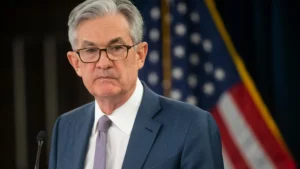
In the U.S., Federal Reserve Chairman Jerome Powell underwent Congressional testimony where he did not materially change his tone relative to the FOMC press conference, leaving open the possibility for another 75bp hike in July and keeping larger (and theoretically smaller) moves on the table in aim to boost flexibility.
His comments emphasized that long run labor market strength is dependent on price stability, reiterating the Fed’s mandate and priority to fight inflation. Treasuries rallied moderately mostly led by the belly of the curve with some softening in commodities as focus shifted to the growth cool-down in context of material June flash PMI misses in the U.S. and Europe albeit both still in expansionary territory. In Asia, yen weakness in the backdrop of BOJ’s loose policy stance is bringing to light potential competitiveness issues for the region with the greatest impact likely on industrialized countries led by Korea and to a lesser extent Vietnam, Thailand, and Malaysia. In China, President Xi reemphasized the Party’s ambitious annual 5.5% growth target for the first time in months potentially opening the door for additional policy measures to shore-up the economy. Effectiveness will remain a key question mark with the greatest upside likely stemming from evolution of the zero covid approach, which faces steep political and social hurdles.
G-7 Latest: Summit starts with inflation, recession on agenda.
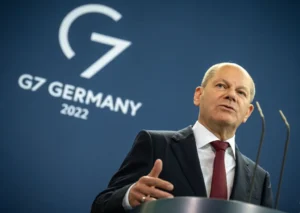
Group of Seven leaders will discuss a potential price cap on Russian oil during their three-day meeting in the Bavarian Alps that started Sunday, even as many of the details of the complex mechanism remain unresolved.
The UK, the US, Japan and Canada also plan to use the summit at Schloss Elmau to unveil a ban on new gold imports from Russia, which Britain said will have a “huge impact” on President Vladimir Putin’s ability to fund his war in Ukraine, raging about 1,200 kilometers (746 miles) to the east. Issues on Sunday’s opening-day agenda include inflation and the threat of recession, climate change, infrastructure and investment and foreign and security policy, while a number of bilateral meetings took place, including between German Chancellor and summit host Olaf Scholz and US President Joe Biden.
Biden condemned a Russian missile strike on Kyiv earlier Sunday, telling reporters it was “more of their barbarism.” Four Russian missiles struck residential buildings in the center of the Ukrainian capital following widespread bombardments in the north and west on Saturday, including missile launches from Belarusian airspace. The attack was Moscow’s first strike on the Ukrainian capital in months. Russia’s defense minister made his first visit to troops serving in Ukraine, while Putin met with his Belarusian counterpart and promised nuclear capable missile systems.
While France is not opposed to the US proposal for a price cap on oil, it wants a broader discussion with oil producers, according to a senior French official. EU sanctions have a stronger impact on Russia than a potential oil-price cap, added the official, who asked not to be identified by name. G-7 leaders will also address the nuclear talks with Iran, and Iranian output should be part of discussions on oil prices, the official said. European Council President Charles Michel wouldn’t rule out attending the G-20 in Bali in November even if Putin goes, saying multilateral channels could be a forum for delivering international condemnation of the invasion in Ukraine.
Is the euro area entering another sovereign-debt crisis?
Indebted Italy must pay 1.9 percentage points more than Germany to borrow for ten years, nearly double the spread at the start of 2021.
The borrowing costs of Spain, Portugal and even France are up sharply, too—and spreads were even higher before the European Central Bank promised on June 15th and 16th to turn the tide. As in the nightmares of 2012, the central bank is working on a plan for bond-buying to prevent weak countries from spiraling towards default. Echoing Mario Draghi’s promise to do “whatever it takes” to save the euro area, Christine Lagarde, president of the ECB, warned on June 20th that anyone doubting the central bank’s resolve would be “making a big mistake”.
The ECB’s pledges should forestall a crisis for the time being. Yet be in no doubt, in the long run simply depending on the central bank to underwrite the debts of the euro zone’s governments leaves the currency union intolerably fragile. Having spent 2 trillion USD supporting its economies through the pandemic, Europe is more indebted than it was a decade ago. Italy, the bloc’s third-largest economy, has towering net debts worth nearly 140% of its gdp, up from 108% at the start of the previous euro crisis in 2010. France’s balance-sheet looks almost as dodgy as Italy’s did after the global financial crisis. High inflation will ease the burden somewhat this year. But as the ECB raises interest rates to get inflation down, the cost of servicing what remains will rise.
High interest rates take time to make themselves felt in countries’ budgets: Italy’s outstanding debt has an average remaining tenor of almost eight years. The lag creates time for the ECB to prevent a crisis in which fears of default become self-fulfilling by raising borrowing costs. The central bank is used to walking the line between preventing runs and giving spendthrift countries an incentive to incur debts at its expense. As in the 2010s, it will undertake to contain spreads, but its help will probably come with strings attached.
En garde Lagarde: the biggest threat is that containing spreads will not be enough to protect vulnerable economies. Investors expect the ECB to raise interest rates to 2% by the end of the year. As a result, even rock-solid Germany, which by definition pays zero spread, is now charged 1.8% to borrow for ten years, up from -0.5% less than a year ago. If rates were to rise further, Italy would start to look wobbly, even if spreads could be contained at their current level. The country probably cannot tolerate yields on its bonds much above 4%. Around that point, the goals of price stability and defending indebted countries would become irreconcilable.
Gustavo Petro becomes first left-wing president in Colombia’s modern history and will assume office in August with a mandate for change

Petro obtained 50.4% of the votes in the presidential election runoff on Sunday, June 19th, compared with 47.3% for his populist opponent Rodolfo Hernandez. Petro will take office on August 7th with a four-year mandate.
Petro is the first ever leftist president in Colombia’s modern history. Accordingly, his period in power implies potential meaningful shifts in economic and social policy compared to the recent past. We expect that higher uncertainty around the economic outlook will likely keep markets in a relatively cautious mood regarding Colombia. However, we note that early rhetoric from Petro’s camp appears to signal willingness by the incoming president to seek “national unity” and attempt to build political bridges between the two sides of a highly polarized electorate. A critical step from a market perspective would be the appointment of a credible technocratic economic team, which should assuage concerns about potential bias toward economic heterodoxy.
Investors would be particularly focused on the positions of Finance and Energy Ministers in the new cabinet as well as clear commitments that Central Bank independence will be fully respected. Higher social spending and bigger involvement of the state in economic life were two of Petro’s pre-election campaign anchors that could prove to be particularly challenging in the context of Colombia’s elevated fiscal and external deficits and will likely retain sharp market focus in the first few months of the new Administration. In terms of foreign policy, Petro has vowed to seek a unified front on key global issues such as climate change and social equality with other left-leaning leaders across Latin America, as well as to normalize relations with Venezuela. The latter could introduce complications in Colombia’s strong relationship with Washington.
The U.S. does not recognize Maduro as Venezuela’s legitimate president and has leaned on Colombia’s outgoing Duque Administration to exert maximum pressure on Caracas. Amid a new chapter in Colombia’s political history, investors will be looking to institutional checks and balances and a fragmented centrist-leaning Congress to limit potential radical departures from the country’s traditionally predictable policy environment and orthodox macroeconomic framework.
South Africa’s final report on state capture released; May inflation surprises to the upside
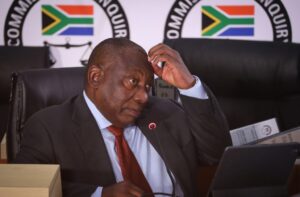
Chief Justice Raymond Zondo published the last piece of the ongoing investigation into state capture under Jacob Zuma.
This, in addition to prior implications, found Zuma’s political support of the Guptas’ media channels to be in breach of the Constitution and Executive Members’ Ethics Act and also determined that charges should be brought against Zuma’s son for facilitation of embezzled funds related to the Guptas. Additionally, the investigation found that Ramaphosa and the ANC were at fault for not doing more to prevent such actions. Meanwhile, May headline CPI data surprised 40 bps to the upside at 6.5% y/y, breaching the SARB’s upper target bound largely due to food and energy price pressures.
The state capture report increases the risk of protests and unrest as the focus shifts to Ramaphosa’s response and actions deployed to prosecute Zuma, which must occur by October. Efforts taken to improve control over the security apparatus following last summer’s largely orchestrated social volatility should help to offset the scope and severity of protests, if they emerge. While not our base case, a broadening of discontent amid the accelerating inflation backdrop cannot be ruled out. While Ramaphosa and the ANC’s popularity will likely continue to face headwinds into the 2024 election as result of the investigation, we do not see Ramaphosa’s position as Head of the ANC under threat. Separately, upside risks to inflation continue to materialize, placing increased pressure on the Central Bank as seen globally. Given that the majority of the pressures remain outside of core inflation, we think the SARB will sustain its pace of 50 bps hikes for now. If broadening of inflationary pressures deepens in the coming months, particularly among services, and/or rand depreciation accelerates, a 75-bps hike becomes more likely.
Stay up to date
More Newsletter to Check



SUBSCRIBE TO NEWSLETTER
Subscribe to download our daily economics and business roundup


×
![]()