
The Egyptian Minister of Planning announced that the country’s economic growth in the first nine months of the current fiscal year reached 7.8%, compared to 1.9% a year ago

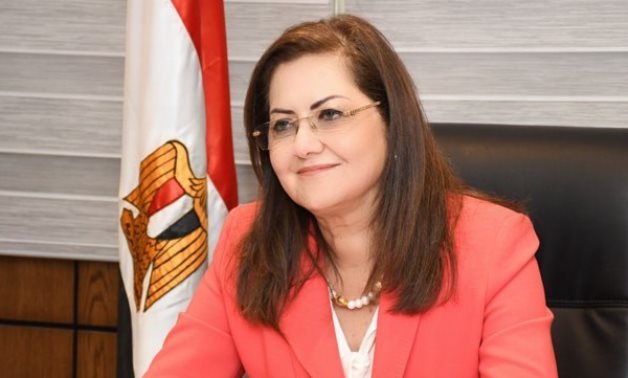
For our top talks today, first, the Egyptian Minister of Planning, Hala Al-Saeed, announced that the country’s economic growth in the first nine months of the current fiscal year reached 7.8%, compared to 1.9% a year ago. While the growth rate reached 5.4% in the third quarter of the current fiscal year, compared to 2.9% a year ago. The growth rate was reached 9% in the first half, and expectations indicated that growth for the whole year would reach 6.4%, but Egypt returned its expectations for economic growth for the current fiscal year 2021-2022 to 5.7%, but Al-Saeed said today, according to a statement issued by the cabinet meeting, that Economic growth this year will be about 6.2%. The Minister of Planning added that all economic activities in Egypt witnessed an improvement during the first nine months of this year, as the restaurants and hotels sector witnessed a growth of 62.8%, telecommunications by 16.4%, the Suez Canal by 13%, the manufacturing industry by 10.3% and construction and building by 8.2%. (Bloomberg Asharq)
- Second, Egypt hopes to finalize a fresh assistance program with the IMF “within two months,” according to the Prime Minister Moustafa Madbouly.
Madbouly did not provide details on the program during the meeting, but said it would aim to “sustain [the state’s] economic reform programs and affirm that Egypt is moving in a disciplined manner.” The government has been in talks with the Fund for several months on a new assistance program to help it mitigate the fiscal strain and balance of payments pressure caused by spillover effects from the war in Ukraine. Madbouly said earlier this month that it could take months before an agreement is sealed, while CBE governor Tarek Amer said we would only receive limited funding due to it already exceeding its quota. Finance Minister Mohamed Maait said earlier this week that talks were going “very well.”. (Hapi Journal)
- More for our good news, the Egyptian government is set to organize a workshop hosting a group of experts, specialists, economists, and investors to discuss the State Ownership Policy Document, which will be the start of a social dialogue on the matter, Prime Minister Mostafa Madbouly stated on May 24th.
The social dialogue will continue for three months, Madbouly noted, adding that the government is ready to listen to all opinions and views because of the unity of the goal, which is the interest of the nation and the economy. (Arab Finance)
- Moreover, the Minister of Finance Mohamed Maait said that the State Ownership Policy aims to achieve a balance between the participation of the private and public sectors in the economic activity,
which includes the government's exit from some sectors to pave the way for boosting the contribution of the private sector to 50% of the gross domestic product (GDP) over the next three years. Earlier in May, Madbouly announced that the Egyptian government aims to increase the private sector’s share in total economic investments to 65% in the coming three years. (Arab Finance)
- Also, the Planning and Budget Committee at the Egyptian House of Representatives has approved a draft law extending the suspension of Law No. 113 of 1939 on land tax for an additional year.
Under the new draft, the suspension law shall be effective for a year starting from the next day to the last day of suspension enacted by Law No. 147 of 2020, which means that the added suspension term will continue until the end of July 2023. Commenting on the approval of the draft law, Deputy Chairman of the Planning and Budget Committee Yasser Omar said that it is alleviating tax burdens for workers in the agricultural sector and encouraging them to increase their production. (Middle East News Agency (MENA))
- In addition, the Egyptian Minister of Petroleum Tariq Al-Mulla revealed joint plans with the eastern Mediterranean countries to increase the quantities of liquefied gas to Europe, during the coming period.
The Egyptian minister expected to start drilling and constructing a natural gas pipeline with Cyprus at the end of this year, noting that the pipeline would be ready for operation in 2025. In February 2018, Egypt signed an agreement with Cyprus to build a pipeline between the two countries to transport gas from the Cypriot Aphrodite field, whose reserves are estimated at between 3.6 trillion and 6 trillion cubic feet to Egypt. All procedures for agreements and approvals from the Egyptian and Cypriot parliaments have been completed, according to El-Molla. In 2018, Egypt announced that the cost of laying the pipeline to transport gas from Cyprus to Egypt ranges between 800 million and one billion USD. Egypt exports one billion cubic feet per day of gas currently, according to the minister, who expected the quantities to increase to more than 1.5 billion cubic feet per day during the next two years. (Bloomberg Asharq)
- Banque Misr and the National Bank of Egypt (NBE) have launched their mega 800-feddan project Wesal at Kilo 30th of Suez Road.
Al Ahly Sabbour in collaboration with Founders, a subsidiary of Hyde Park Development, launched a marketing campaign for the project's first phase, which has a payment plan that includes 10% down payment and up to 10 years of installment. Wesal, includes two residential compounds, and a commercial project. incorporates over 10,000 fully-finished units with complete utilities that are ready for immediate residence. (Arab Finance)
- On the other hand, the ugly truth, the government is having to find an extra 15 billion EGP this fiscal year to cover the extra costs of imported wheat, which has soared in price following Russia’s invasion of Ukraine.
This had knock-on effects on the budget, with the government having to add another 6 billion EGP to its 2021-2022 budget allocation to fund debt repayments. Current wheat prices are also far above the price the government has used to calculate its expenditure in the coming fiscal year: the draft budget released this month forecasts prices to average 350 USD per ton during the year, 20% below the current market price. This has caused some MPs to raise doubts about the ministry’s forecast. (Enterprise)
- Also, International car manufacturers are now rerouting shipments away from Egypt because local importers and distributors haven’t been able to make transfers, Abed El Kader Talaat, a board member at the Automotive Information Council (AMIC).
“No letters of credit were opened, no transfers were made, and therefore suppliers have made the decision to not produce for Egypt and instead divert to other markets,” he said. Around 13 brands will no longer appear to be delivering to Egypt, including some of Europe’s biggest brands — Citroen, Volkswagen, Audi, Fiat and Peugeot among them — as well as Jeep and Asian companies including Geely. (Enterprise)
- “Foreign companies now don’t know the future of their exports to Egypt, and seeing as there is demand in other countries that can’t be met due to the global crisis,
they started redirecting some of the cars bound for the Egyptian market to other countries,” Abou Ghaly Motors’ commercial director, Tamer Kotb said. Abou Ghaly’s portfolio of brands includes Mercedes, Jeep, Alfa Romeo and Subaru, among others, as well as a stable of mobility solutions. Few new cars have entered the market since March, Kotb said. Talaat told us that there are around 29k vehicles waiting to be released from port, which could help to ease the supply squeeze should the import issues be resolved. (Enterprise)
- We believe that cars prices are going to continue to be much more expensive than they currently are! It’s all about supply and demand.
Between the wide gap between supply and demand, local car prices are set to rise between 30-40%, and that’s on top of the 2-5% hike in the global market due to the rise in raw materials prices on the back of war in Ukraine. We are being less optimistic, taking into account the devaluation earlier this spring of the EGP and ongoing market turmoil. (Zilla Capital)
- And on the global front, IMF chief Kristalina Georgieva has urged India to reconsider its wheat export ban on the sidelines of the World Economic Forum (WEF) at Davos.
The restrictions could have a major impact on countries most vulnerable to the wheat crisis, including Egypt and Lebanon, “where what we see is not only risk of hunger but risk of social unrest and impact on global stability.” Egypt is already in talks with India for exemption from the ban, which was introduced in response to surging domestic prices in India and a heatwave that threatened to impact the harvest. Supply Minister Ali El Moselhy said earlier this month that an agreement to buy 500k tons of Indian wheat will not be impacted by the ban, but clarified later that the purchase has been agreed but not signed. (Bloomberg & Reuters)
Stay up to date
More Newsletter to Check



SUBSCRIBE TO NEWSLETTER
Subscribe to download our daily economics and business roundup


×
![]()