
When stable coins become simply unstable

When stable coins become simply unstable
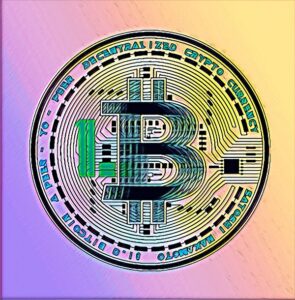
The volatility in Bitcoin and Ethereum was triggered by Tether’s parity to USD breaking down and came just as the plumbing in Terra USD unraveled further noise in the asset class. It broke away from its main stable coin UST which is exchangeable for the LUNA token, and was partly responsible for Bitcoin’s slump below 26,000 USD.
The fragility of the alternative asset class was picked up by U.S. Treasury Secretary Yellen who advocated for stablecoin legislation by the end of 2022 and it was also an item that was flagged in the Fed’s Financial Stability Report. However, volatility in cryptocurrencies did not infect equity or credit markets. Instead, the upside inflation surprises out of the U.S. (8.3%) was coupled by China (2.1%) along with broader growth concerns, higher rates and higher inflation that led to another bout of equity market weakness.
Not only did copper fall below 9000 USD/t for the first time in six months spark some concern, but so did the U.S. Treasury market. The 10-year note endured a peak-to-trough move over the week of 39bp, although the rally in global rates is not necessarily from a position of strength. Then came the volatility in CNH. China’s Central bank, the PBoC’s, strategy of stronger daily fixes and the dovish stance has seen CNH and CNY continue to weaken closer to 6.80. The market is now geared up for a LPR cut next week (more below).
That said, we did see a surprise tightening out of Malaysia with a 25bp hike as inflation in LATAM has spread to CEEMEA and is slowly emerging in Asia. Within CEEMEA, an interesting monetary policy committee development was with the Czech National Bank. With a dovish committee member reappointed this week (Ales Michl) and two outgoing hawks in June, a challenging dynamic could unfold. There is a growing risk that we could see an outsized hike at the next MPC, which could be subsequently cut by a more dovish committee (we can’t help but think of Turkey here). Nevertheless, Czech inflation remains concerning with the data release of 14.2% over the past week.
The week that shook crypto
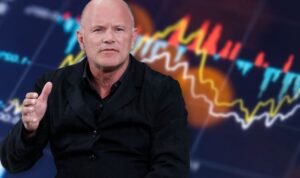
In January, Mike Novogratz — hedge fund rock star turned crypto heavy hitter — tweeted a picture of a sizeable new tattoo on his left shoulder. It featured the image of a wolf howling at the moon and a banner saying “Luna”, a cryptocurrency then trading at 78 USD.
“I’m officially a Lunatic!!!” enthused the one-time macro investor at the Fortress hedge fund group, and now founder and CEO of Galaxy Digital, an investment management firm with ambitions to be “the Goldman Sachs of crypto”. By the start of April, luna peaked at 116 USD after being snapped up by buyers including enthusiastic retail investors.
But this week, luna lost it all. Its value slid to zero after terraUSD, a sister token, collapsed in value, despite being designed to track the value of the US dollar. It is unclear what Novogratz will do about his tattoo. The CEO of Galaxy, which invested in the company behind the tokens, did not respond to several requests for comment. But the demise of luna and terra has left a mark on the global $1.3tn cryptocurrency market. Coins come and go — thousands have died since bitcoin was invented in 2009. But terra’s failure has cut through. It was designed to be a so-called stablecoin — a staid, boring token that simply tracks the dollar.
In just one week, the valuation of exchange Coinbase has crashed, bitcoin prices have slumped below 30,000 USD for the first time since last summer and tether — the largest stablecoin akin to the Federal Reserve of crypto — failed to keep up its dollar peg. Many financial markets have fallen sharply in recent weeks, as investors have been spooked by surging inflation and the prospect of sharp rises in interest rates. But the collapse in cryptocurrencies has been even more dramatic. Their performance has undermined claims that crypto assets can provide a hedge against inflation or behave as a form of digital gold — let alone the grander boasts of crypto partisans about the potential for digital tokens to become the pillar of a new global financial system.
G7 warns of global hunger crisis unless Russia lifts Ukraine blockade
German foreign minister says alternative export routes are urgently needed as wheat price soars.
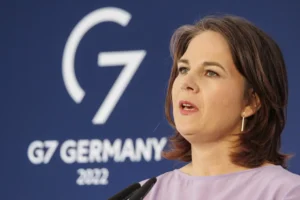
German foreign minister Annalena Baerbock said the G7 group of industrialised nations was urgently seeking alternative routes for the export of Ukrainian grain as Russia’s war against its western neighbour raised the risk of a global “hunger crisis”. Speaking at the conclusion of a three-day meeting of G7 foreign ministers in Germany, Baerbock said some 25mn tons of grain were stuck in Ukrainian ports that were being blockaded by Russian forces — “grain that the world urgently needs”.
Wheat prices have been soaring in recent weeks over supply concerns caused by the Ukraine war, as well as a number of droughts around the world. The US Department of Agriculture forecast that global supplies for the coming crop year would fall for the first time in four years. Worries about the supply situation deepened on Saturday when India announced it was banning wheat exports, a move that is likely to push up food prices and fuel hunger in poor countries that rely on imports of Indian grain. The government in New Delhi said the ban was designed to “manage the overall food security of the country”.
We believe the easiest way to resolve the food crisis would be for Russia to stop its combat operations and allow grain out of Ukrainian ports, a move that would help to “normalise global food prices”. But Russian president Vladimir Putin showed no inclination to do that. Instead, western governments were looking at alternatives to the sea route. Around 5-6mn tons of grain per month are normally exported via Ukraine’s ports and the G7 was analyzing different rail routes that will allow us to get the grain out as soon as possible.
Finland’s president Niinistö tells Putin his country will apply to join Nato
Top Turkish aide says Ankara is ‘not closing door’ on the bid despite Erdoğan’s earlier concerns.
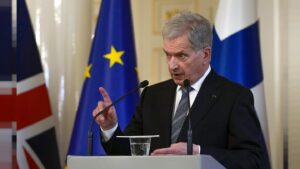
Finland’s president has told Vladimir Putin of the Nordic country’s plans to apply for Nato membership as a top Turkish aide downplayed fears that Ankara could torpedo its bid. Sauli Niinistö called Putin on Saturday to explain how Russia’s demand in late 2021 that Finland and Sweden not apply for Nato membership followed by its invasion of Ukraine in February had fundamentally altered the security environment.
Putin responded that Finland would be wrong to abandon its neutrality and that seeking membership of the western defence alliance would damage relations between the two countries. Russia’s invasion of Ukraine caused public support for Nato membership to surge in Finland and Sweden, forcing politicians to undertake urgent security reviews. Finland’s government will decide on Sunday to apply for Nato membership with the formal application sent sometime next week after parliament debates it on Monday.
We believe that Finland was maximising its security. By joining Nato, Finland strengthens its own security and assumes its responsibility. It is not away from anyone else. Also, in the future, Finland wants to take care of the practical questions arising from being a neighbour of Russia in a correct and professional manner,” Finland’s presidential office said. Any application by Finland and Sweden would need to be ratified by all 30 countries, a process that could take six to 12 months. Swedish and Finnish officials said on Friday that their contacts with Turkish ministers and other officials had been positive until now.

Why is Elon Musk really putting his Twitter deal ‘on hold’?
Elon Musk cited bots when he declared the $44bn takeover of Twitter “temporarily on hold”, but not everyone is buying that explanation.
The world’s richest man on Friday tweeted that he was pausing his bid as he awaited further information to confirm whether the social media company’s quarterly estimates of its fake accounts were accurate, sending Twitter shares falling and raising questions about what, exactly, Musk meant.
Indeed, agreed transactions cannot be legally put-on hold. Twitter’s lawyers are still working with Musk’s team to complete the deal, said one person familiar with the situation. The billionaire himself said he was still “committed to the acquisition”. Some analysts have interpreted Musk’s manoeuvre as an attempt to force Twitter back to the negotiating table to get a cheaper deal as tech stocks cool, or to find a way to pull out.
Social media companies have long tried to rein in the bogus accounts littering their platforms, bombarding users with unsolicited commercial messages, content or requests. Beyond financially motivated spams and scams, fake accounts can boost follower counts, giving the impression of false popularity, or be deployed in disinformation campaigns. Musk’s tweet suggested concern that Twitter — which has long battled complaints about its bots — has more fake accounts than it discloses. He highlighted a news story citing a recent estimate from the company that “fewer than 5%” of Twitter’s users are fake and spam accounts.
We believe Elon Musk is putting the deal on hold to negotiate a lower price. Once a deal is agreed, however, it is very hard to get a board to accept a lower offer. Delaware courts, which rule on most corporate cases, have rarely allowed this to happen unless agreed by both parties. Twitter’s board would risk being sued if it agreed to a lower price without serious justification. Musk could use what is known as a “material adverse change” clause to force Twitter to come to the negotiating table and accept a lower offer. The bar for such a clause, however, is pretty high. Many buyers tried to use them during the pandemic to lower the price of deals agreed before the Covid-19 pandemic wreaked havoc on valuations. Few succeed.
The Week Ahead
The main event rests with ECB minutes next week. A number of ECB speakers have signaled lift-off in July and this could be validated further in the minutes. Then we will have UK CPI inflation on Wednesday and the second-reading of the Eurozone inflation. The impact of Chinese lockdowns should also be visible in the industrial production release next week. However, Shanghai authorities have penciled in May 20th to start easing restrictions. The market is also anticipating a 5bp cut in the 1-year and 5-year Loan Prime Rates. As for other EM interest rate decisions, we have Egypt (9.25%), Philippines (2.0%) and South Africa (4.25%) coming up. Inflation updates are also due from Israel and Poland, although the toppy releases from Czech Republic (14.2%), Poland (12.4%), Brazil (12.1%) and Hungary (9.5%) barely moved macro markets in their respective countries. Beyond that, economic growth is expected to highlight a 1Q contraction in Chile, along with Israel but it is more uncertain, then upbeat figures out of Hungary, Romania and Thailand are expected. We would also add that economic data out of Brazil is likely to be light given BCB employee strikes.
Stay up to date
More Newsletter to Check



SUBSCRIBE TO NEWSLETTER
Subscribe to download our daily economics and business roundup


×
![]()