
The Fed Chair said if the FOMC needs to raise the Fed Funds Rate by more than 25 bps at a future meeting

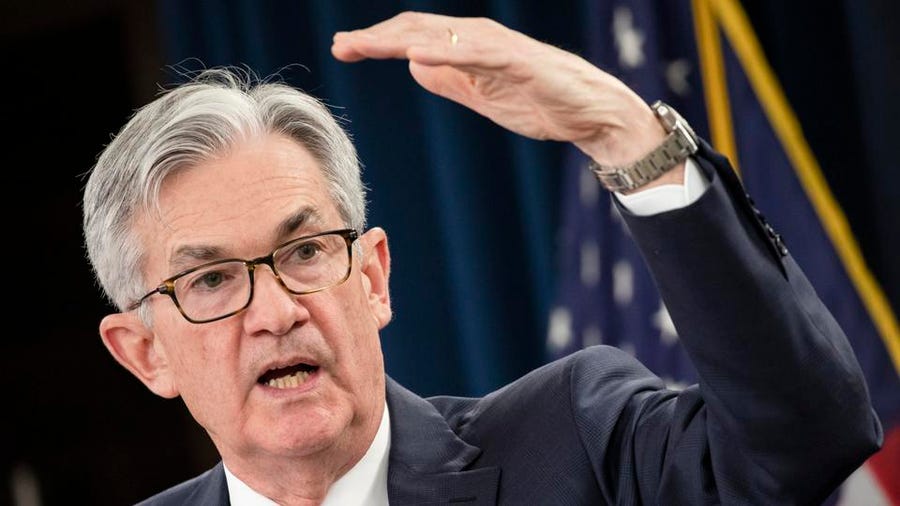
Another hawkish twist by Powell
The Fed Chair said if the FOMC needs to raise the Fed Funds Rate by more than 25 bps at a future meeting, then it will do so, and “no one expects a soft landing in the current context”. Not only did Powell acknowledge an exceptionally tight labor force, but also that “forecasters widely underestimated the severity and persistence of supply-side frictions”.
Bostic added further fuel to the fire noting that an “extremely aggressive rate path is appropriate”. This leaves the Bloomberg U.S. Treasury Index down 5.7% YTD, which is now the worst year-to-date start since its inception in 1974 after surpassing 1980 when returns were down 5.5%. Goldman Sachs were also the first to forecast 50 bps hikes at the May and June meetings, while revising their year-end 10-year forecast to 2.70% from 2.25%. They even expect the U.S. Treasury curve on a 2s10s basis to invert by 20 bps, from its current level of 20 bps, although 2s10s forwards have already breached 0 bps.
Of equal importance, Ukraine’s Zelensky continues to ramp-up pressure on NATO and indeed spoke at the Thursday Summit, as Biden was in Europe meeting with key policymakers. NATO is set to deploy further troops to Bulgaria, Hungary, Romania and Slovakia, while Sweden and the UK will supply more weapons to Ukraine. In turn, the U.S. and Canada are set to export more oil and LNG to the EU, which caused some softness in oil. However, a storm caused significant damage to a pipeline in the Caspian Sea (CPC) that exports Kazakh and Russian oil with volumes of up to 1m bpd, which underpins the recent strength in crude.
Meanwhile, the front-loaded hiking cycle in emerging markets is well underway in CEEMEA and LATAM. Argentina hiked 200 bps to 44.5% after 250 bps in February. South Africa hiked for a third time as ZAR continues to strengthen, with upside to inflation and growth, while Brazil is expected to hike 100 bps in May and 50 bps in June before the tightening moderates. After the assumed hikes over the next two months, it would bring the total tightening cycle in Brazil to 1,025 bps since liftoff in March 2021.
Stalemate on the ground in Ukraine dims prospects for ceasefire in the near-term; West increases sanctions pressure on Russia
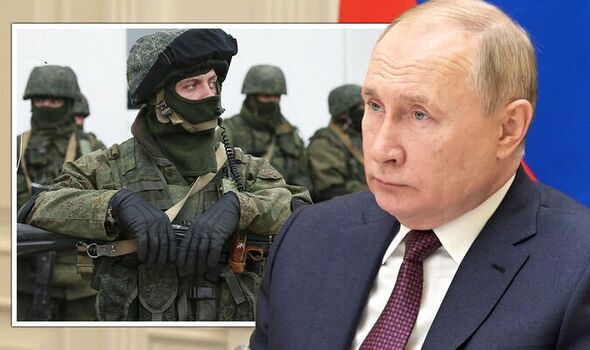
The past week was characterized by an increasing stalemate in the Russian ground offensive and even partial counter-offensives by Ukrainian forces leading to recapturing of some territories. Summits of U.S. and EU leaders in Brussels confirmed Western unity in support of Ukraine and added new sanctions against Moscow, although the EU remains constrained by member-states’ energy dependence on Russia. Meanwhile, President Putin demanded payments for natural gas by consumers on Russia’s “unfriendly countries” list to be made in RUB going forward, in an apparent counter-sanctions attempt.
One month into Russia’s invasion of Ukraine, the Kremlin appears to be sticking to its original maximalist objectives, including imposing formal neutrality for Ukraine, regime change, demilitarization and territorial demands in Crimea and Donbas. Such demands are clearly unacceptable to Ukraine’s government in the context of lack of decisive progress by Russian forces on the ground. Russia’s offensive has been largely stopped by Ukraine’s extremely motivated and well-armed defenders, forcing the invaders to resort to long-distance shelling and allegedly committing war crimes against civilians.
Given the massive negative repercussions for Russia’s economy from ongoing global isolation and tightening sanctions, significant losses in terms of lives and equipment, and potential domestic political implications, we struggle to see an “off-ramp” for President Putin in the current environment. This means that a ceasefire and substantive peace negotiations are unlikely in the near-term, unless Russia manages to secure a better bargaining position. Moreover, an outright defeat in Putin’s military gamble could threaten his regime’s political survival, raising the stakes dramatically. This signals to us that further escalation in the conflict carries a significant probability, regardless of the price that Russia is likely to pay in terms of economic and human loss.
For its part, the West appears unified in its financial and military support for Ukraine and has strong incentives to make sure the “price” President Putin pays in Ukraine is as high as possible. As for developments on the ground, an important signpost we’ll be watching next week is whether Belarus’ President, Lukashenko is able to persuade his military and political elites to join the war under strong pressure by the Kremlin. If Belarusian forces were to invade Western Ukraine, a risk Ukrainian intelligence has been warning about, that would present significant challenges to Ukraine’s defense efforts and might threaten vital supply corridors through the Polish border. It would also likely bring active fighting closer to NATO territory. In the context of a lingering conflict, we expect implications for global inflation and growth, food supply, and energy/commodity prices to be increasingly coming to the surface, with significant political, social and market implications across emerging markets.
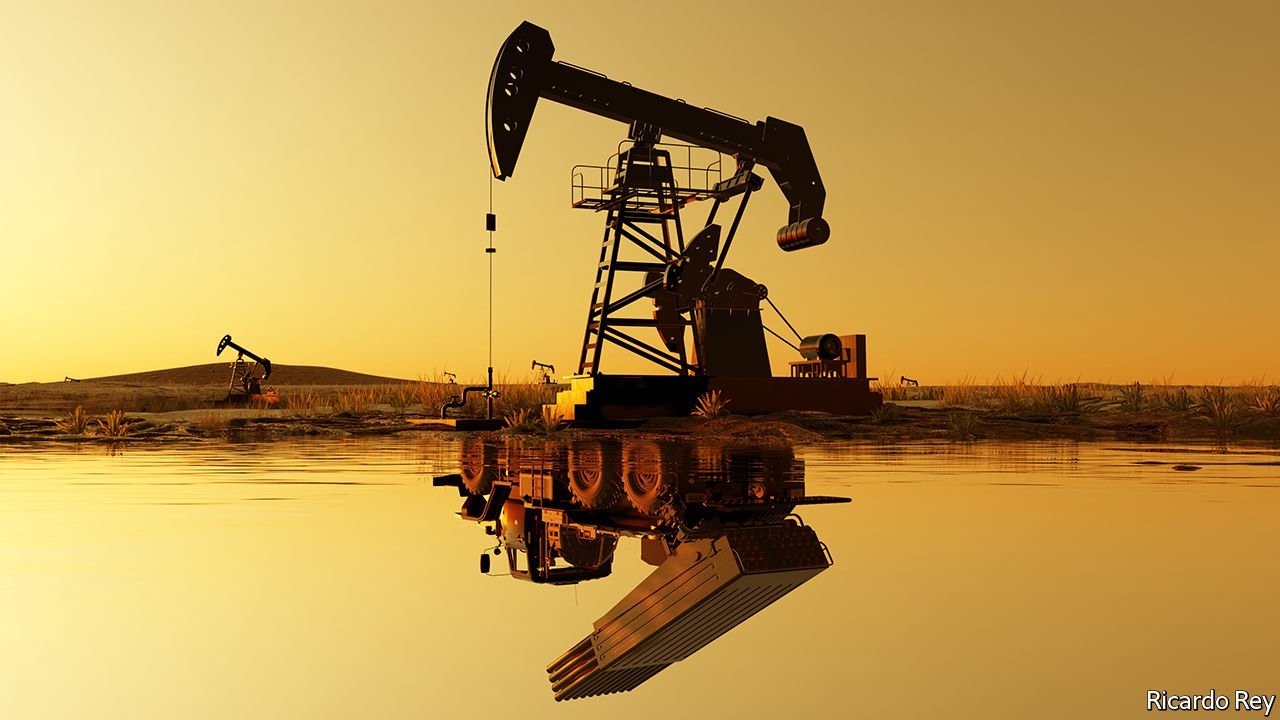
Why energy insecurity is here to stay
Energy and commodities lie at the dark heart of Vladimir Putin’s regime and the threat it poses to the world. Four trillion dollars of oil and gas exports over the two decades of his rule have paid for the tanks, guns and Grad missiles now killing Ukrainians. Natural-resource earnings have entrenched a rent-seeking elite that has created an offshore archipelago of yachts, nightclubs and Caribbean front companies, stifled representative politics and indulged Mr Putin’s megalomaniacal fantasies.
As Russia supplies 10-25% of the world’s oil, gas and coal exports, many countries, especially in Europe, are vulnerable to coercion by it. For them, the war in Ukraine has been a shock that adds urgency to the creation of an energy system which depends more on sun, wind and nuclear reactors than on derricks and rigs. Yet don’t fool yourself that this new era will allow an easy escape from the curse of energy crises and autocrats.
Weeks of chaos in energy markets are beginning to hurt consumers. Petrol prices in Los Angeles are over 6 USD a gallon for the first time. As sanctions on Russia bite, traders predict, Europe will run short of diesel. Germany is preparing to ration natural gas next winter, in case Russia cuts off supplies. In Asia, oil importers are bracing for a balance-of-payments hit. In a tight market, shocks are hard to absorb. Oil spiked at 122 USD per barrel this week after a pipeline from Central Asia to the Black Sea suffered storm damage and Iranian-backed Houthi rebels attacked Saudi energy facilities.
The immediate reaction of governments everywhere has been to scramble to find more fossil fuels, however polluting to the environment or painful to their pride. With Western encouragement, Saudi Aramco, the world’s biggest oil firm, is raising investment to 40 billion-50 billion a year. At one point, the Biden administration buttered up Nicolás Maduro, Venezuela’s dictator, perhaps to get more oil from a state which in 2005 supplied 4% of the world’s crude.
The longer-term question being asked by many is: how fast can they abandon fossil fuels altogether? The energy strategy announced this month by the EU envisages independence from Russia by 2030—in part by finding new sources of gas, but also by doubling down on renewables. As the folly of relying on Russia becomes clear, nuclear power is back in fashion. France plans to construct six new plants and is aiming for “total energy independence”. On March 21st Britain said it would build a new generation of reactors at “warp speed”. A redesigned energy system that will belch out less carbon also promises an escape from the 20th century’s great game of relying on energy from despots.
China must eventually learn to live with the coronavirus
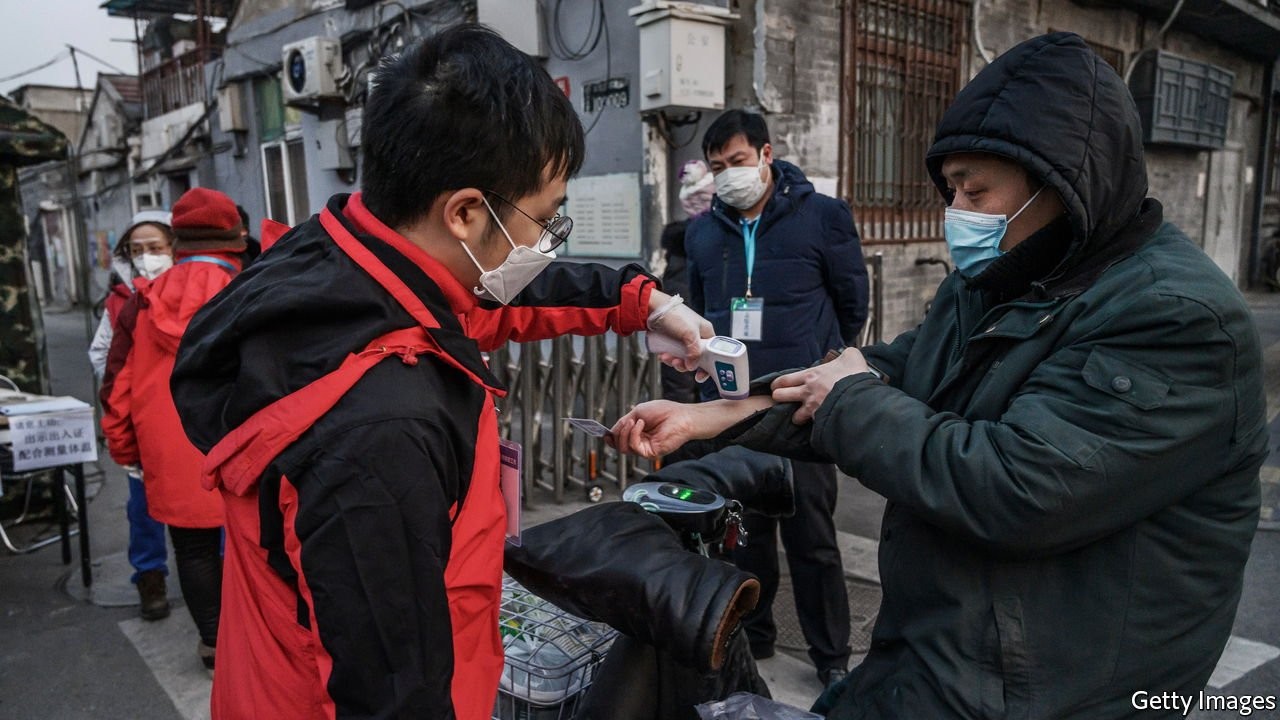
An outbreak of covid-19 on the scale China is experiencing would barely register in most countries. Much of the world has decided to live with the virus. Not China, though. So far in March it has recorded around 27,000 new local symptomatic cases—and each one is viewed as a threat to the government’s “zero-covid” policy.
Chinese leaders think their policy a huge success. The Economist estimates that the country’s death rate from covid is 5% of America’s. The Chinese economy has expanded by 10.5% in the past two years, compared with 2.4% in America and 0.4% in advanced economies generally. China’s covid controls “demonstrate the advantages” of the Chinese Communist Party’s leadership and the socialist system, boasts Xi Jinping, the president. All the signs are that his people tend to agree.
For now, China has little choice but to stick with its covid controls. The problems go beyond vulnerable old people. China’s skimpily funded health system is ill-equipped to handle a big wave. Using Hong Kong’s mortality rates as a guide, a large outbreak on the mainland would result in millions of deaths. The lingering trouble is that Chinese officials lose their jobs if an outbreak occurs on their watch. Fear of the sack creates incentives to invent sometimes cruel and irrational local rules.
In the longer term, though, change is inevitable. More transmissible variants like Omicron make the cost of enforcing zero-covid very high. Today tens of millions of people are locked down. Morgan Stanley, a bank, thinks China’s GDP may not grow at all this quarter compared with the last. That could affect the global economy. Restrictions in Shanghai and Shenzhen, accounting for more than 16% of China’s exports, raised alarm once again about supply chains.
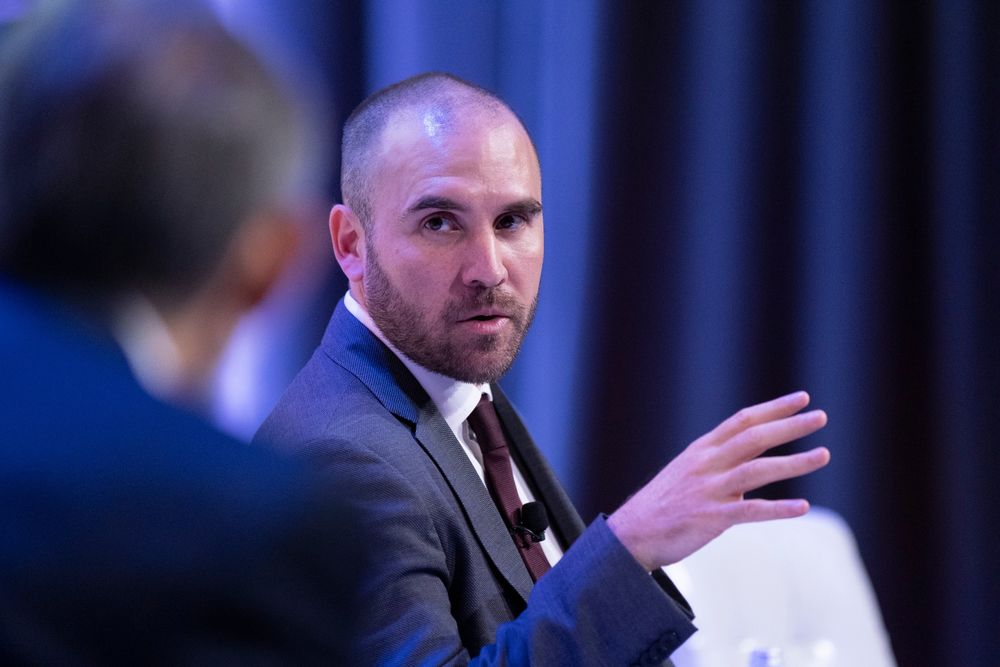
Argentina reached tentative deal with Paris Club and hiked rates with IMF board approval soon
Following a trip to France, Minister Guzman reportedly reached a tentative agreement with Paris Club creditors regarding its 2 billion outstanding debt which involves partial payments proportional to payments made to other bilateral creditors during the recently agreed 30-month EFF IMF program.
An agreement is set to be finalized by June 30th. Meanwhile, BCRA hiked rates by 200 bps bringing its 28-day Leliq rate to 44.5%. The IMF released a press release over the weekend indicating that the board will meet this Friday to review the staff level agreement and extend the government’s payments to month-end, avoiding an arrears scenario.
The developments are credit positive as they reflect the authorities’ intentions to maintain constructive multilateral and bilateral relations and take incremental macroeconomic steps needed to abide by program parameters. Uncertainty remains elevated and has in part contributed to a dull asset price reaction as political tensions persist while pre-war staff level program assumptions may need to be revised in the backdrop of the new environment. The IMF’s most recent press release suggested this may occur before board approval otherwise likely at the first or second reviews. We generally envisage IMF program compliance with some surmountable slippage. Downside risks could stem from domestic political challenges which could drive bouts of higher uncertainty regarding disbursements.
Stay up to date
More Newsletter to Check



SUBSCRIBE TO NEWSLETTER
Subscribe to download our daily economics and business roundup


×
![]()