
The war in Ukraine will determine how China sees the world and how threatening it becomes

The war in Ukraine will determine how China sees the world and how threatening it becomes
There’s quite a widespread sense that the global order — and, with that, the way the global economy and international monetary system function — will be different in future due to Russia’s invasion of Ukraine and what it has triggered in western responses. There is less clarity on what the changes will look like.
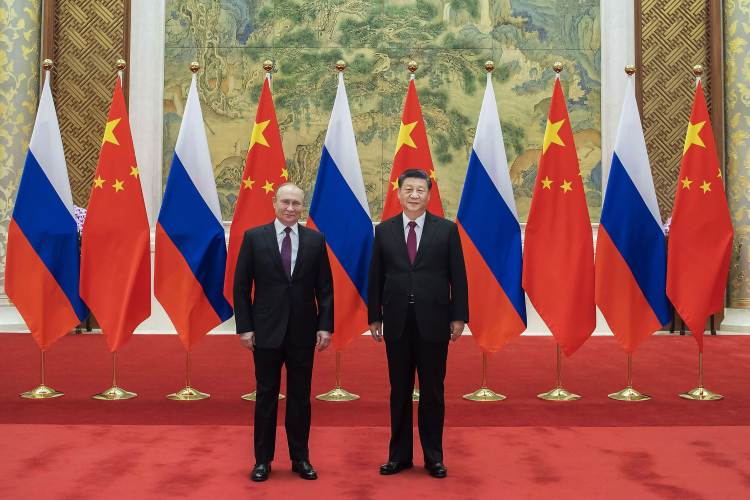
It is too soon to know if a winner will emerge from the fighting. But, on the other side of the planet, the world’s emerging superpower is weighing its options. Some argue that China will build on a pre-war friendship with Russia that knows “no limits”, to create an axis of autocracy. Others counter that America can shame China into breaking with Russia, isolating Vladimir Putin, its president. Our analysis suggests that neither scenario is likely. The deepening of ties with Russia will be guided by cautious self-interest, as China exploits the war in Ukraine to hasten what it sees as America’s inevitable decline. The focus at all times is its own dream of establishing an alternative to the Western, liberal world order.
Both China’s president, Xi Jinping, and Mr Putin want to carve up the world into spheres of influence dominated by a few big countries. China would run East Asia; Russia would have a veto over European security and America would be forced back home. This alternative order would not feature universal values or human rights, which Mr Xi and Mr Putin see as a trick to justify Western subversion of their regimes. Hence Mr Xi would like Russia’s invasion to show up the West’s powerlessness. If the sanctions on Russia’s financial system and high-tech industry fail, China will have less to fear from such weapons. If Mr Putin lost power because of his miscalculation in Ukraine, it could shock China. It would certainly embarrass Mr Xi, who would be seen to have miscalculated too, by allying with him—a setback when he is seeking a third term as Communist Party leader, violating recent norms.
For all that, however, Chinese support has its limits. The Russian market is small. Chinese banks and companies do not want to risk losing much more valuable business elsewhere by breaking sanctions. A weak Russia suits China because it would have little choice but to be flexible. Mr Putin would be more likely to give Mr Xi access to northerly Russian ports, to accommodate China’s growing interests in, say, Central Asia, and to supply it with cheap oil and gas and sensitive military technology, including perhaps the designs for advanced nuclear weapons.
For the last two weeks, Chinese equities have been in a perfect storm
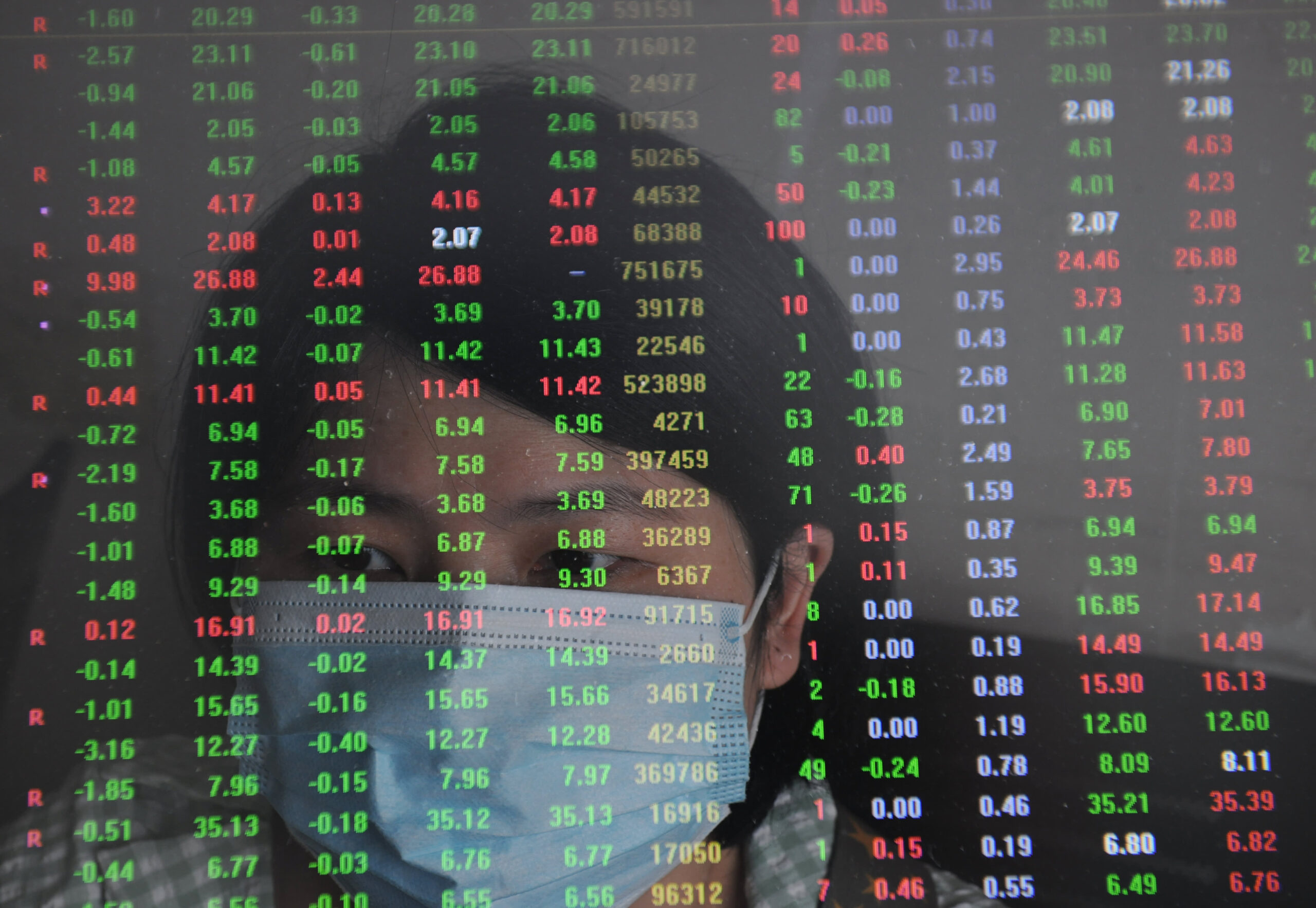
Foreign investors have dumped a record 6 billion USD worth of Chinese shares in the first three months of 2022 as they take fright at new coronavirus outbreaks and the risk that western countries will sanction Beijing if it supports Russia’s war in Ukraine.
Chinese shares took a heavy blow at the start of this week as Covid-19 cases surged in major cities like Shanghai and Shenzhen, extending declines that have proven persistent in the year so far. Local investments have edged back up after Beijing signaled it would take a suite of market-friendly measures. But foreign holdings of stocks listed in mainland China have not. That divergence, investors and fund managers say, reflects a host of concerns that have battered valuations even of companies that led the China stocks rally of 2020, when the market posted world-beating gains on the back of Beijing’s early success with its strict “zero-Covid” policy.
Chinese equities have lagged all year. The benchmark CSI 300 index is just 4 per cent above where it stood at the end of 2019, when the first Covid-19 outbreaks were reported in China. The Nasdaq Golden Dragons index of large Chinese tech groups listed in New York has dropped by about a quarter. By comparison, over that same period the US’s S&P 500 and tech-focused Nasdaq Composite have risen roughly 37 and 52 per cent, respectively.
Foreign outflows through Hong Kong’s so-called stock connect trading schemes with Shanghai and Shenzhen began on March 7, but intensified dramatically earlier this week. By Friday’s close, net sales by offshore investors this year totaled almost 6 billion USD, on track to mark the worst quarter since that link-up scheme began in 2014.
Hopes for a quick negotiated end to military conflict in Ukraine appear premature
Ukraine and Russia might be close to agreeing on a “fifteen-point draft deal” to end the conflict, which induced a breath of optimism into global markets mid-way this week. Meanwhile, Russian forces continue shelling Ukrainian population centers and appear to be regrouping for a potential ground offensive against Kyiv. A rocket attack against a Ukrainian army training facility 20km from Poland’s border brought fighting closer to NATO territory.
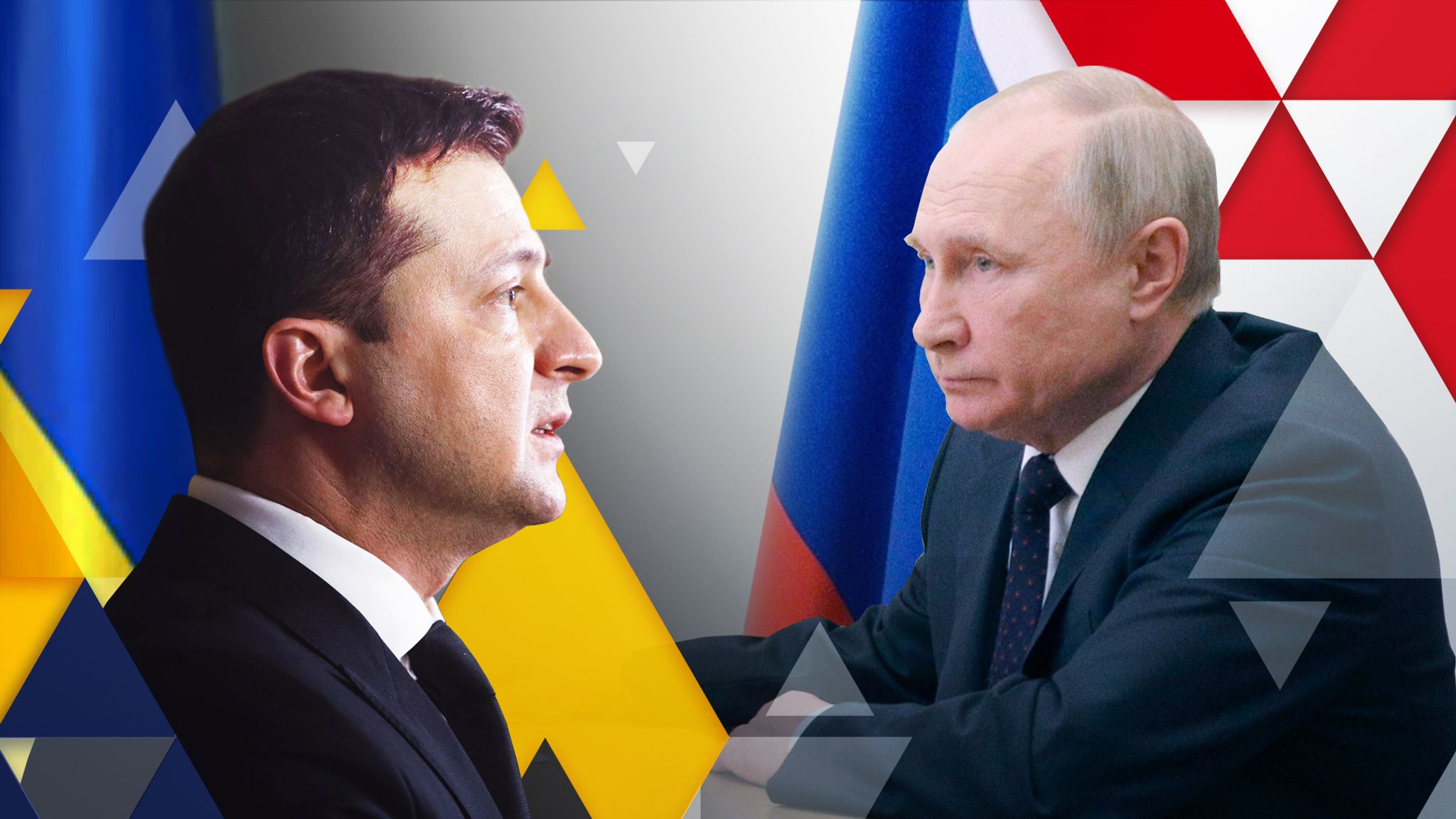
We are doubtful about ceasefire and peace agreement prospects at this stage of the conflict. The military situation on the ground from Russia’s perspective and the Kremlin’s stated objectives of its invasion, point to a continuation of active fighting regardless of parallel diplomatic discussions. The Zelensky Administration has signaled flexibility on the issue of neutrality/not joining NATO, but Russia’s territorial demands over Crimea and independence of the separatist regions in Eastern Ukraine remain unacceptable to Kyiv. As such, we think that market optimism as reflected by recent asset price dynamics is premature. In fact, both sides have poured cold water on expectations of a quick ceasefire.
Ukrainian negotiators signaled that the “draft deal” published by the Financial Times (FT) reflects Russia’s starting positions as opposed to any sort of negotiated outcome, while the Kremlin said that reports of major progress in Ukraine talks are “wrong”. We believe that President Putin retains rather maximalist objectives in his military gamble in Ukraine. Given the already catastrophic impact for Russia’s economy, increasing global isolation, and even some initial tentative uncertainty about his domestic political standing over the medium-term, he appears to have little choice but to continue pushing for a better position on the ground before engaging in more substantive peace talks.
As such, unless there is a significant breakthrough in ceasefire negotiations in the coming days and a direct meeting between Presidents Zelensky and Putin comes on the table, we believe a ground offensive to capture Kyiv is a likely next phase in the conflict. Ukraine’s capital is well fortified and defended by highly capable and motivated forces, which unfortunately points to a bloody protracted battle, more civilian refugees, and significant further infrastructure damage. Meanwhile, large financial and military support from the West continues to flow towards the Zelensky Administration, with a large new batch of sophisticated lethal defense systems provided by the U.S. this week, including military drones.
Cutting oil demand would hurt Russia and ease a supply crisis.
Getting people to use less fuel will make it easier to both impose tough sanctions on Russia and withstand a supply disruption.
Responding to Russia’s invasion of Ukraine, the International Energy Agency unveiled a 10-point plan this week to slash oil demand in developed economies by about 2.7 million barrels a day within four months. Reducing demand will make it a lot easier to impose tough sanctions on Russian exports, but the proposals also serve the longer-term goal of putting energy use on a more sustainable path.
If achieved, the reduction would represent about 5.5% of the agency’s forecast for oil demand in the countries of the OECD this year. Even more could be cut if measures were adopted by less-developed countries as well. Many of the 10 points are things that have been done before, either during the oil-price crises of the 1970s or more recently during the Covid-19 pandemic. There’s good evidence that they work.
The IEA is extremely worried about an impending oil supply crisis. Its latest market outlook, published on Wednesday, warned of the possibility of the biggest supply disruption in three decades, with the potential for the loss of at least 3 million barrels a day of Russian exports starting as soon as next week. With Saudi Arabia appearing unlikely to open the taps more quickly and spare capacity among other OPEC+ members limited, there is little hope of additional supplies to offset a loss. U.S. shale producers aren’t raising output either. An initial release of emergency stockpiles will cover about two weeks of Russian oil exports and further releases may be approved.
So, if the IEA is right about a supply shock, demand reduction will have a critical role to play in balancing oil markets. But the extent to which its suggested measures will be adopted is far from certain. As hateful as Russia’s invasion of Ukraine is, it is not clear whether people in Europe and the U.S. feel that changing their oil consumption habits is a necessary, effective or appropriate response. The calls for action to combat rising fuel prices center on governments cutting taxes or supporting domestic oil production. There are few, if any, calls for mandatory fuel-saving measures. Beyond the current crisis, oil demand has to be tackled if the world is to meet its longer-term carbon-reduction goals.
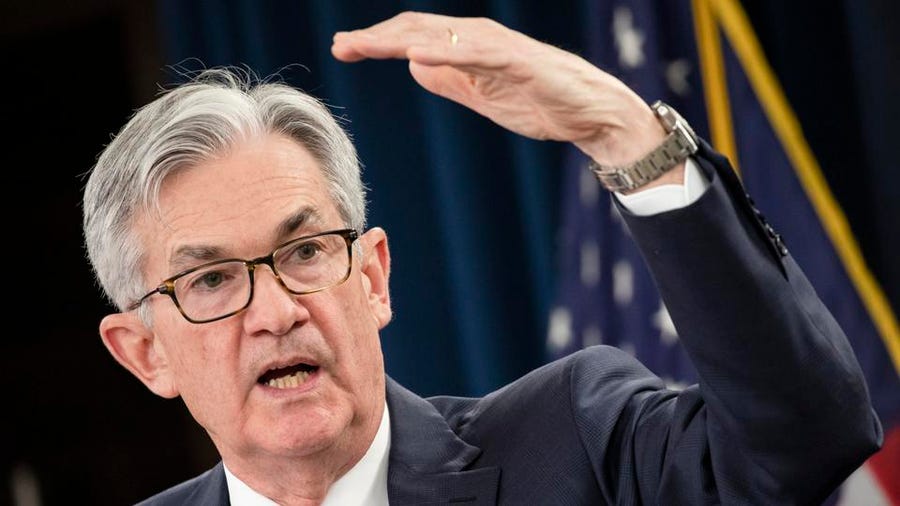
What it means for you when the Fed raises interest rates?
The Fed raised rates for the first time since 2018. What does it mean for our loans and credit card bills? The cost of borrowing money is going up. The Federal Reserve sets the interest rates that banks charge each other for overnight loans to meet reserve requirements. This rate, the benchmark federal-funds rate, influences the interest that financial institutions charge consumers to make purchases such as homes and cars, and finance loans and credit cards. When the Fed raises its federal-funds rate, commercial rates follow in the same direction.
The FOMC hiked 25 basis point (bp) for the first time since 2018, just the BOE hiked for a third time and the ECB seem set for lift-off in early second Half of 2022. Chair Powell also said the Fed expected to reduce the size of its balance sheet at ‘a coming meeting’. The dots now point to a year-end rate of around 2% and imply seven hikes over the next six meetings, hence consensus is shifting to a 50bp hike in May. A 50bp increase is already supported by the Fed’s Bullard, but increasingly from Waller who stated a 50bp hike at one or multiple meetings.
Brazil also hiked 100bp as inflation shows few signs of slowing, although the pace of tightening is expected to slow considerably after the next Monetary Policy Committee (Copom) meeting in May. The Brazilian real is comfortably the top performing emerging markets currency (EMFX) pair year-to-date as well. The focus clearly remained on whether Russia would default on its sovereign debt over the past week. The U.S. allowed Russia to use frozen reserves to pay the USD coupon on the 2023 and 2043 notes.
While it seemed that this may have staved off default, there had been some ambiguity over whether investors actually received the interest payments. The next test comes on Monday, although this USD instrument has the “alternative payment currency event” clause, meaning the coupon can be paid in RUB, EUR, CHF or CBP, but it requires a 15-day notice, which the Ministry of Finance has not published. Further complications come as capital controls prevented payment on foreign-owned Russian local bond exposure that is said to have already been in default, but it hasn’t cross-defaulted into the other Russian sovereign debt.
Stay up to date
More Newsletter to Check



SUBSCRIBE TO NEWSLETTER
Subscribe to download our daily economics and business roundup


×
![]()