Egypt Otsuka Pharmaceutical is set to build a factory for healthy drinks and supplements in Egypt with 30 million USD worth of investment

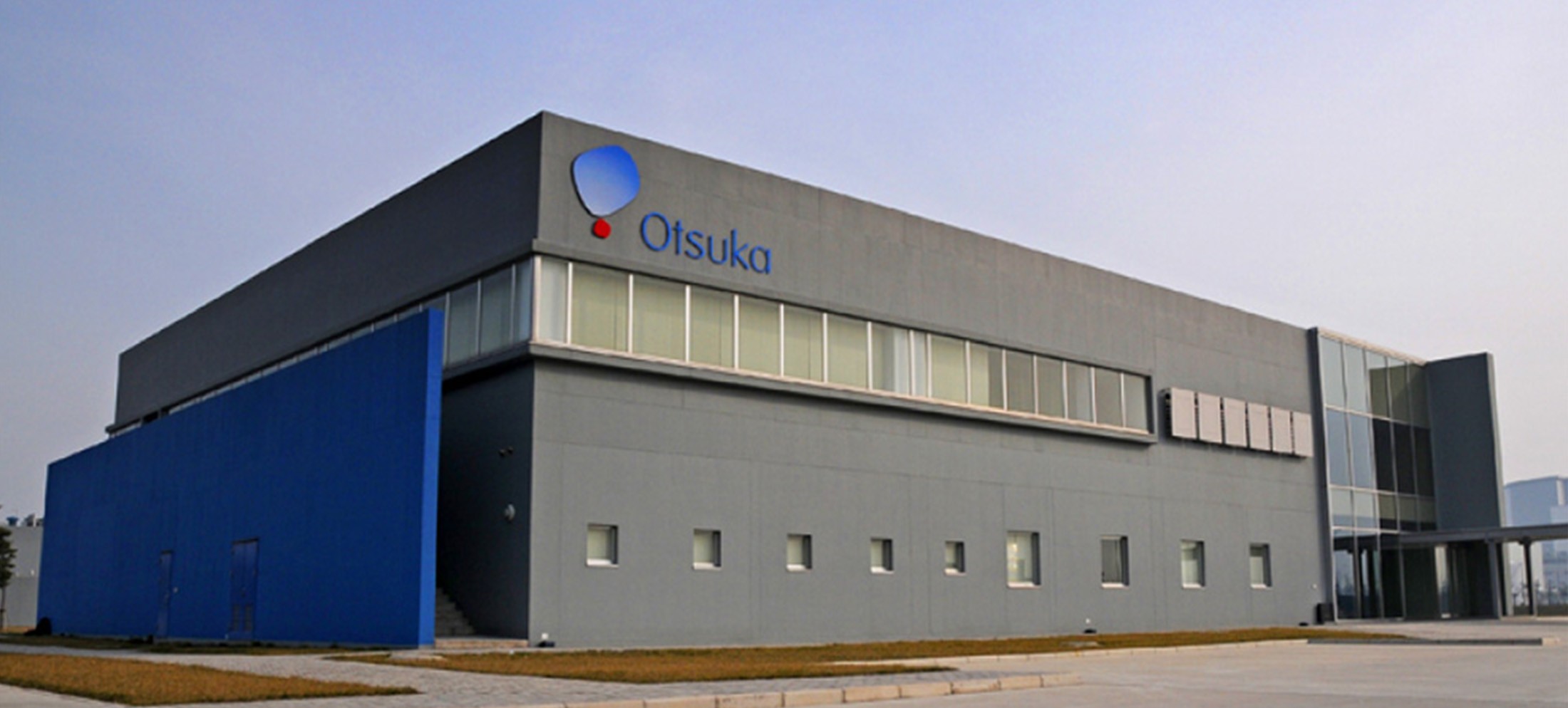
First, Egypt Otsuka Pharmaceutical, a subsidiary of Japan-based Otsuka Holdings Co, is set to build a factory for healthy drinks and supplements in Egypt with 30 million USD worth of investments, according to the company’s President Ahmed Zaghloul. The Egyptian subsidiary of the Tokyo-based Pharmaceutical group is specialized in the manufacturing of medicines, supplements, and healthy drinks, Zaghloul said. The company has a presence in 32 regions worldwide through 194 companies with around 47,000 employees, Zaghloul added. Founded in 1992, Egypt Otsuka Pharmaceuticals operates its factory in the 10th of Ramadan city, manufacturing and marketing medicinal products, including infusions and injections fluids, amino acids, enteral nutrition, and ethical drugs. (Mubasher)
- Second, a consortium of Egypt’s Octa International and Saudi Olayan Group’s Aluminum Products Company (ALUPCO) signed an MoU with the National Organization for Military Production to build an 500 million EGP aluminum factory.
Per the MoU, Olayan will put up the full investment cost and finance the raw materials and operating equipment, as well as take responsibility for the factory’s construction. Octa is an arm of the Kasrawy family’s Dunes Capital Group. It says it will source the raw materials and develop, market and distribute the products. The military-affiliated authority will provide the labor and land for the factory, and contribute to its management, operation and maintenance. (Al Mal)
- Third, German snack food maker Lorenz Snack-World plans to invest 200 million EGP in Egypt between 2023 and 2026.
The company has set up an Egyptian arm — Lorenz Snack World Egypt — and at one point owned a factory in Port Said that has since been sold, the sources said. The company is looking to sell its products in the local market and use Egypt as an export hub for the GCC and Africa. And finally for our invetments, Dairy producer Milkys will spend 400 million EGP on a new factory, CEO and Managing Director Hany Kamel. The dairy producer said around 200 million EGP would be invested initially, and a further 200 million EGP will be spent in a later phase. The company plans to import around 3k cows, bringing its total number of cows to 7k. (Al Mal)
- On the other hand, the Egyptian government is set to launch mega projects in the coming period in the fields of big data centers, oil and gas transmission networks, gas liquefaction plants, telecommunication towers, and rehabilitation of wind farms, according to the Prime Minister Mostafa Madbouly.
The government will offer incentives for each project to attract foreign investments, Madbouly added. He noted that the plans also include developing the Egyptian Exchange (EGX) through offering a group of public companies and two companies owned by the Armed Forces this year. Earlier this week, Madbouly announced that the government would organize a workshop hosting a group of experts, specialists, economists, and investors to discuss the State Ownership Policy, which will be the start of a social dialogue on the matter. (Arab Finance)
- Moreover, Egypt is engaging in mutual plans with East Mediterranean countries to increase supplies of liquified natural gas (LNG) to Europe over the coming period.
The minister stated that amounts of LNG pumped from Damietta and Edco plants are contributing to meeting the European Union's (EU) demand. Egypt has ambitious plans in coordination with East Mediterranean neighbors to supply a big chunk of European and global LNG demand in the coming few years, El-Molla noted. (Business Asharq)
- As for the Aphrodite gas field in Cyprus, El-Molla expected drilling and construction work at the field to begin by the end of 2022, hence, the gas pipeline between Egypt and Cyprus would not be ready for operations before 2025.
He further unveiled that Egypt’s daily gas exports reached 1 billion cubic feet (BCF), noting that exports are projected to grow to over 1.5 BFC per day in the next two years. It is worth noting that Egypt produces between 6.6 and 6.7 BCF of gas daily. Earlier in May, El-Molla announced that the Egyptian energy sector is expected to attract investments ranging between 7 billion USD and 8 billion USD in the fiscal year 2021/2022. (Business Asharq)
- Also, Egyptian Ministry of Transport has started the trial run of the first train from the Spanish manufacturer Talgo on the Cairo-Alexandria rail line, which will be followed by another trial on the Cairo-Aswan line.
The new train is the first of seven trains to be delivered by Talgo, including six contracted between the company and the Egyptian National Railways (ENR), in addition to a train to be delivered as a present to the Egyptian people, Minister of Transportation Kamel El-Wazir stated. Each train comprises 15 carriages (5 first-class, 8-second class, a cafeteria, a power car, and a modern US-made Progress Rail Automotives (PRL) locomotive, El-Wazir noted. (Arab Finance)
- In addition, The Egyptian Minister of Finance Mohamed Maait has announced the schedule for the mandatory application of the e-receipt system for taxes on goods and services, which will start October 1st.
The schedule includes five stages for mandatory registration in the new system and the issuance of e-receipts, Maait said. The minister revealed that the first trial stage already began in mid-April by success partners of taxpayers, while the second is set to start on October 1st and will include mandating 400 taxpayers practicing various activities across Greater Cairo and Alexandria to register. The third stage is scheduled to start in mid-January 2023 and will include 2,000 taxpayers, while the fourth is slated for launch in mid-July 2024 and will comprise five sub-stages and continue for a year. (Arab Finance)
- The new system comes in the context of governmental endeavors to include unrecorded economic activities and has a more accurate estimation of taxes which will add to the gross domestic product (GDP) and help realize economic and development objectives, Maait commented.
The e-receipt system is based on a centralized electronic system, enabling the Egyptian Tax Authority (ETA) to monitor all transactions of exchanging goods and services among sellers and consumers in real-time, Maait added. The minister stressed that the new system will allow for the verification of transactions through electronic integration with points of sale (PoS). The e-receipt system is providing multiple advantages to taxpayers, including facilitation of tax inspection in the least time possible, Maait said. (Arab Finance)
- Lafarge Egypt aspires to return to profitability by 2024, after losses incurred by the company since 2017 until now, according to Solomon Baumgartner Aviles, CEO of the Lafarge group of companies in Egypt.
The reasons for the company’s losses are due to a number of factors, including the increase in production capacity in the local market over demand, the high cost of production and the increase in the price of energy and liberalizing the exchange rate, according to Aviles, who refused to go into details about the value of the accumulated losses and the company’s indebtedness. The production capacity of Lafarge Egypt, which is a member of the global Holcim group, is 9.5 million tons through 5 production lines, and it is the largest company of the global group that operates in 70 countries around the world, and the company expects this year to produce more than 5 million tons from its factory in Egypt of cement. (Bloomberg Asharq)
- The cement sector in Egypt has suffered during the past few years from high energy prices, low demand and a surplus of inventory,
until the intervention of the Competition Protection Authority in Egypt and approved last year the request of 23 cement manufacturers to temporarily reduce production capacity, setting a baseline at 10.69%, which it worked on a somewhat breakthrough for companies in the market. Cement prices in Egypt increased from about 850 pounds per ton in 2019 to up to 1,550 EGP today, but this was accompanied by an increase in the cost of production, energy and raw materials for companies (a dollar equals 18.35 EGP). The biggest impact on the cement industry in Egypt was the government's decision to stop building licenses, especially since private construction represents 70% of the construction market in Egypt. (Bloomberg Asharq)
- Here, it’s worthy to mention that energy prices are the biggest challenge for the cement industry in Egypt now, as energy represents 60% of the cost of production and we import coal from abroad, in 2019 the import price per ton was 50 USD and began to increase after the Corona pandemic.
Now, we are talking about 330 USD per ton as the Russian-Ukrainian crisis continues. Commodity and energy prices rose to all-time highs after the Russian invasion of Ukraine, amid severe shortages of basic materials and commodities. Foreign cement companies invested heavily in Egypt after the privatization initiative that began in the 1990s. These companies include Germany's Heidelberg, France's Vicat, Switzerland's LafargeHolcim, Greece's Titan and Mexico's CEMEX. Later local players established their own factories. (Bloomberg Asharq)
- Moving to our EGX and companies talks, Baladna buys more JUFO shares: Qatari dairy firm Baladna raised its stake in EGX-listed dairy company Juhayna to 10.14% from 9.99% in a 12.4 million EGP transaction.
The firm bought a total of 1.4 million shares in Juhayna, at an average price of 8.85 EGP per share. Baladna paid more for Juhayna shares this time around: The average share price in yesterday’s transaction is almost 50% more than what Baladna paid to acquire a 5% stake in Juhayna less than three months ago, marking its entry to Juhayna. The Qatari firm bought 47.1 million shares in Juhayna for 285.8 million EGP in March, at an average price per share of 6.07 EGP. The Doha-listed firm has continued to up its stake since then, reaching 9.99%, before announcing its latest purchase last Wednesday. (Economy Plus)
- UK’s DPI wants a piece of Kazyon: The UK’s Development Partners International (DPI) is in talks to acquire a minority stake in Tawfeer for Food Products — the parent company of supermarket chain Kazyon.
The company is also reportedly getting interest from other unnamed investors. Kazyon is led by former EFG Hermes CEO Hassan Heikal. (Al Mal). Moreover, Egyptian International Pharma Industries Company’s (EIPICO) board has approved the start of procedures to potentially acquire a 99.9% stake in Upper Egypt Pharma (UP Pharma). Both firms are owned by the Arab Company for Drug Industries and Medical Appliances (ACDIMA). (EGX)
Stay up to date
More Newsletter to Check
SUBSCRIBE TO NEWSLETTER
Subscribe to download our daily economics and business roundup


×
![]()